|
Photographs from ACF
shoots at Bisley and Folkestone during Sixties |
|
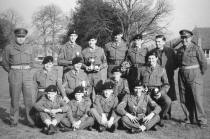
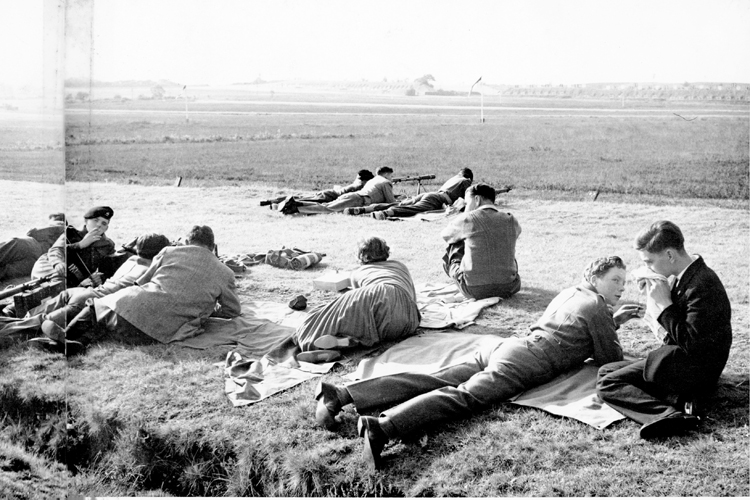
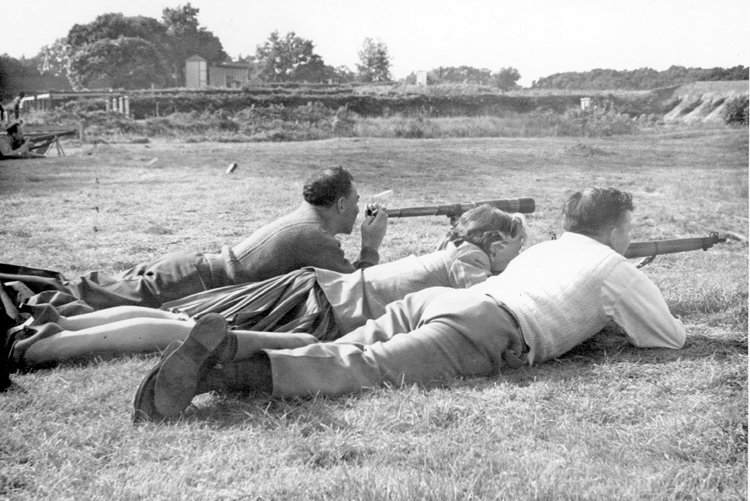
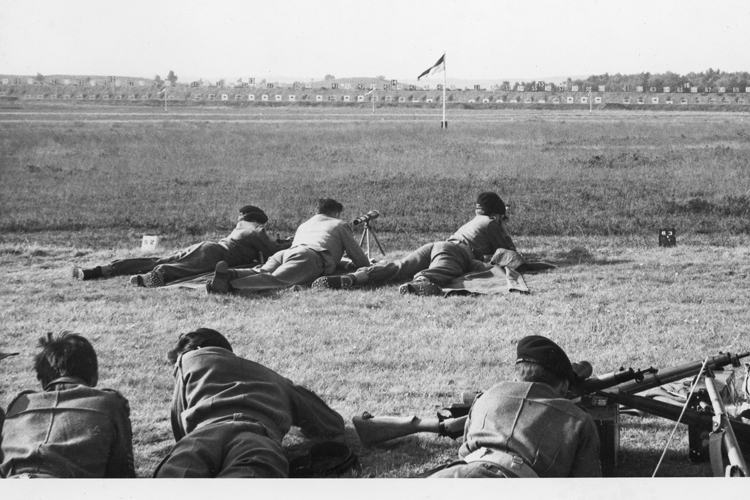
Bisley - Surrey ACF Championships
5 May 1960 |
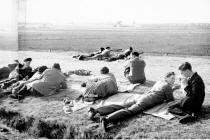
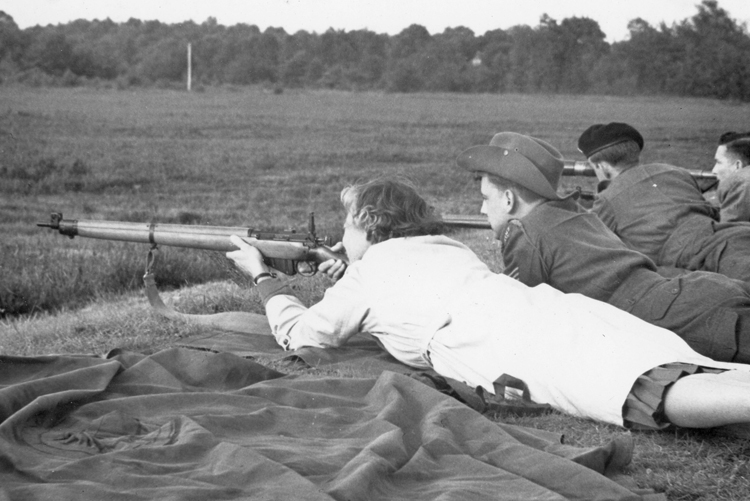
Bisley - Nationals Practice
23 Oct 1960 |
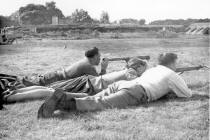
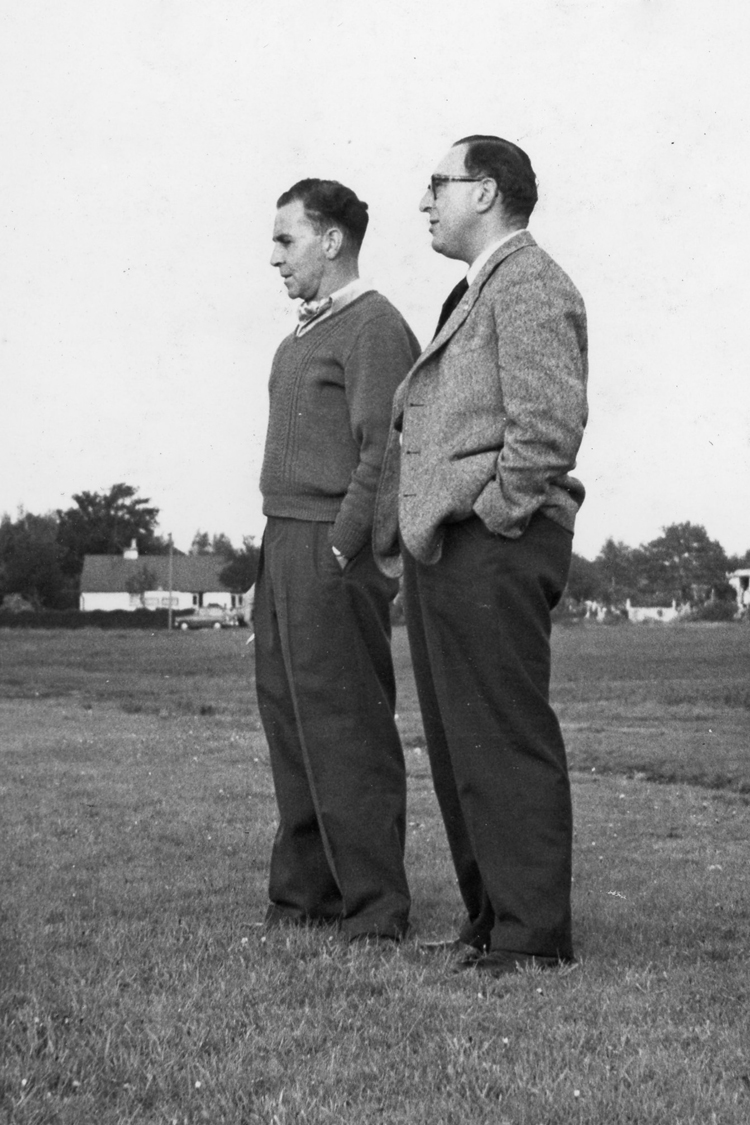
Bisley - Nationals Practice
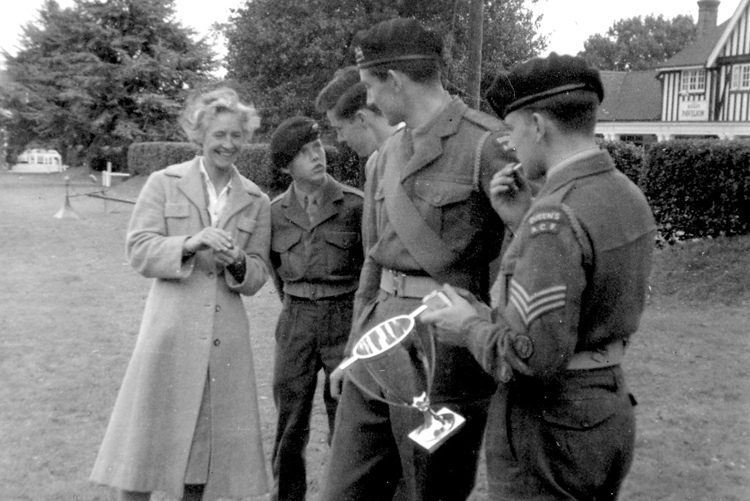
Duncan Smith's mother and father
and (right) John "Pop" Martin
23 Oct 1960 |
|
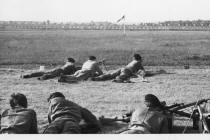
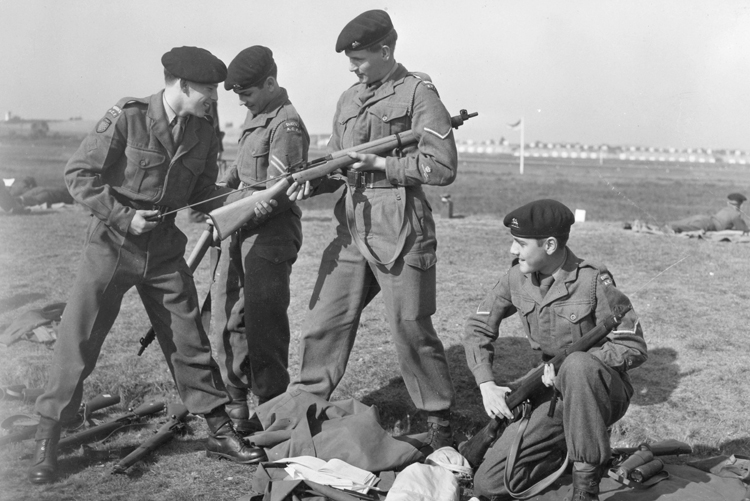
Bisley - Nationals Practice
23 Oct 1960 |
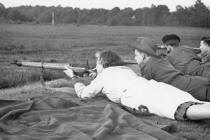
Bisley - Nationals Practice
Duncan Smith's mother and
Tom Shaw |
23 Oct 1960 |
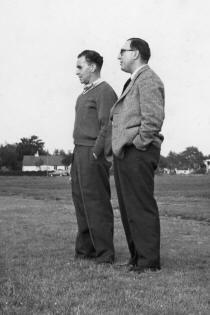
Bisley - Nationals Practice
Captain Les Bishop (right), and
Duncan Smith's father
23 Oct 1960 |
|
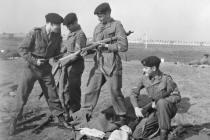
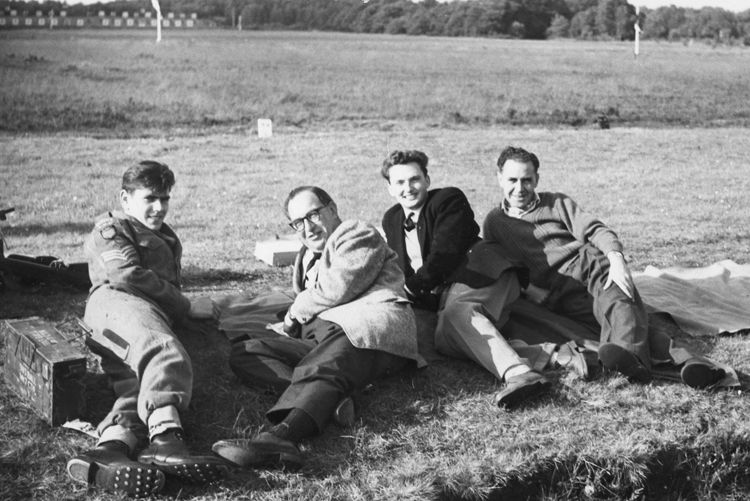
Bisley - Nationals Practice
L-to-R: Tom Shaw, Dave Martin,
Horace Hills, Ray
Humphries
23 Oct 1960 |
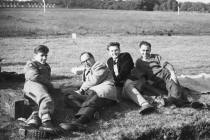
Bisley - Nationals Practice
L-to-R: Dave Martin, Les Bishop
Roy Shaw & Duncan Smith's father
23 Oct 1960 |
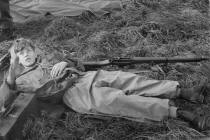
Bisley - Nationals Practice
Duncan Smith | 2 Oct 1960 |
|
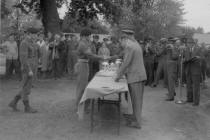
Bisley National Championships
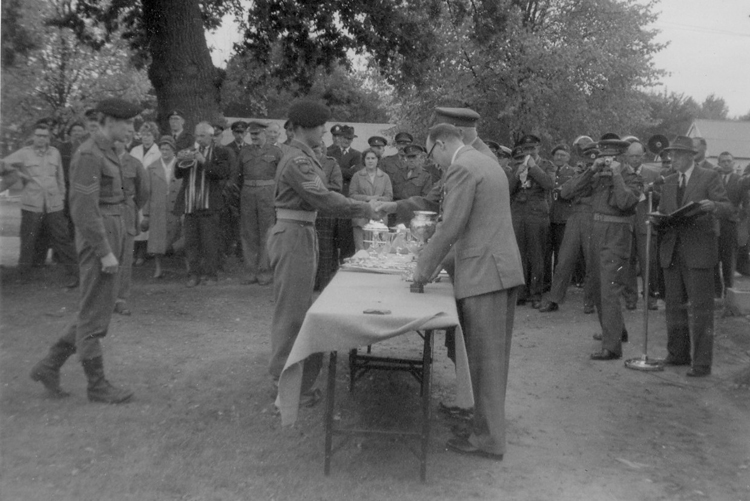
Sgt. Dave Martin accepting
Inter-cadet Force medal
2 Oct 1960 |
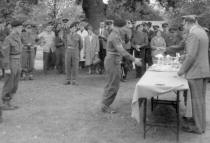
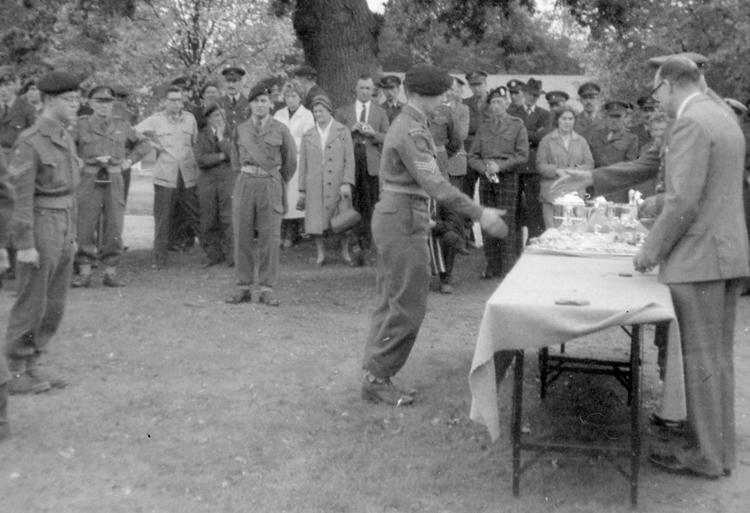
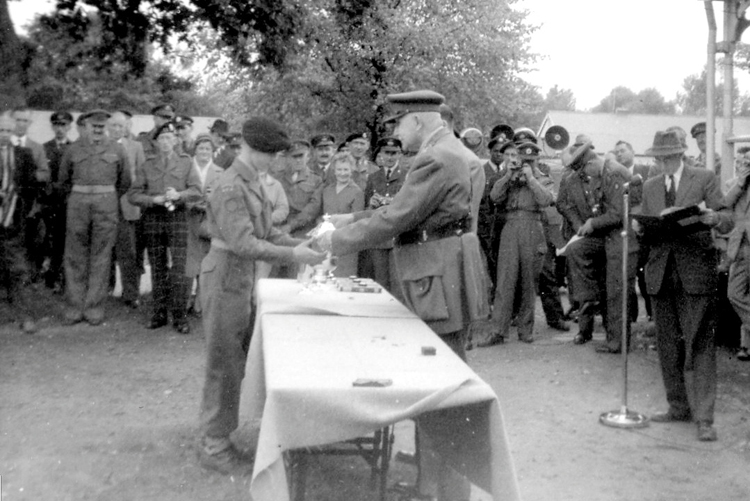
Bisley National Championships
Tom Shaw accepting
Inter-Cadet Force medal
2 Oct 1960 |
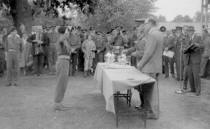
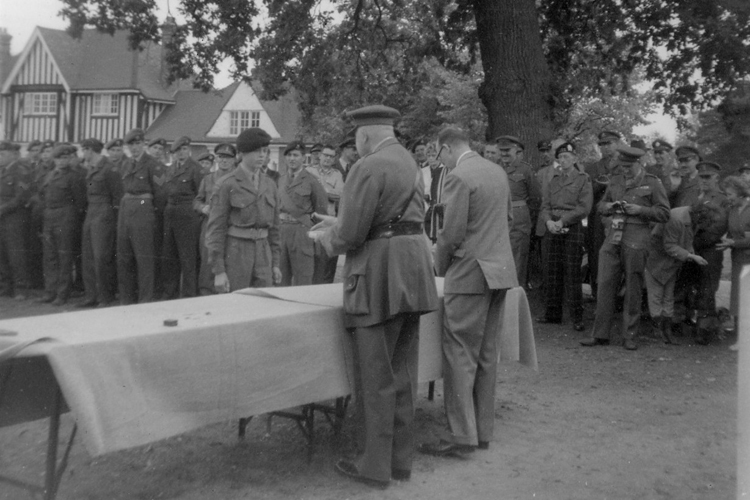
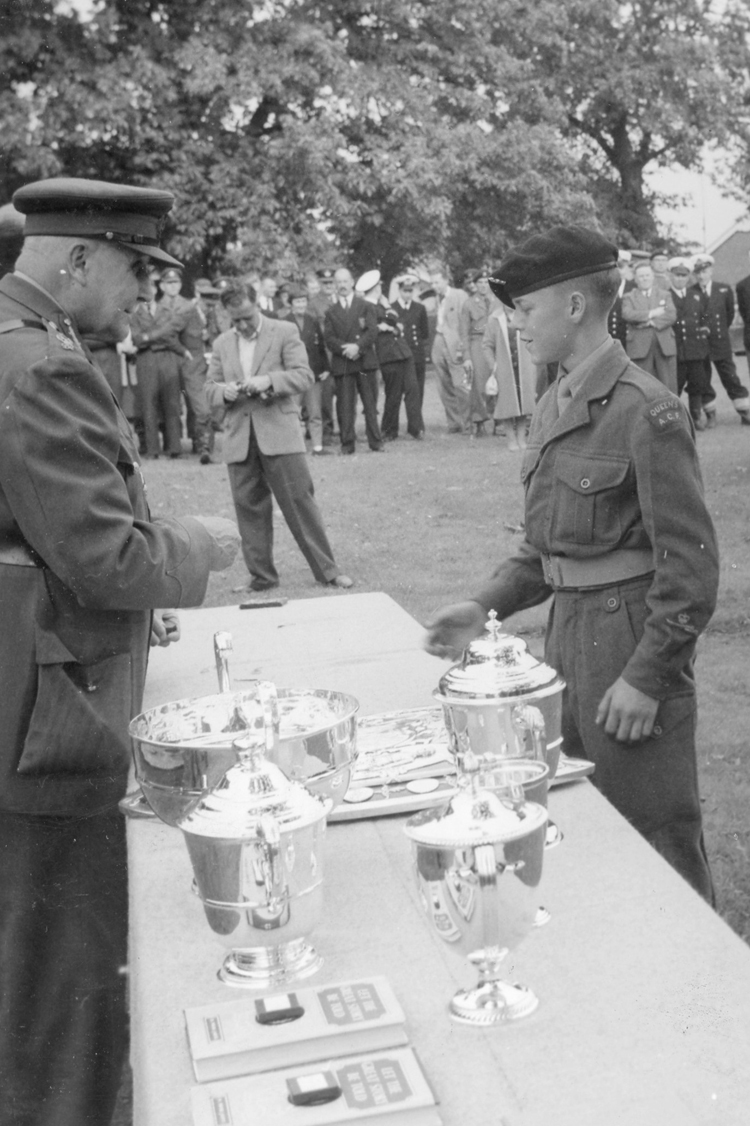
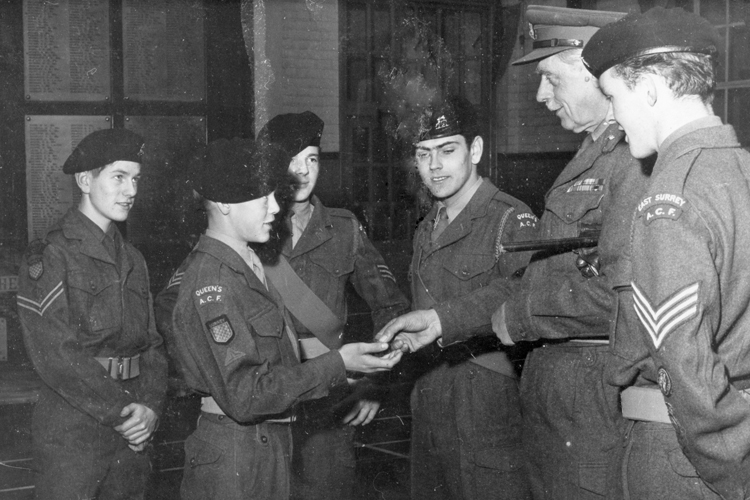
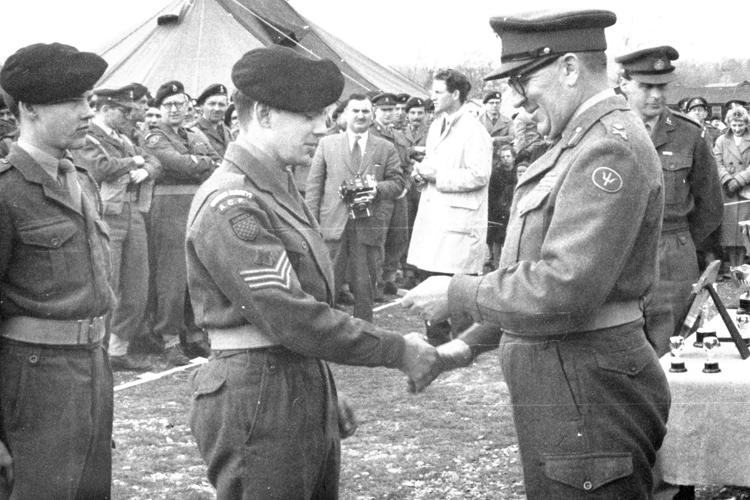
Bisley National Championships
Cdt. Duncan Smith accepting
Inter-Cadet Force medal
2 Oct 1960 |
|
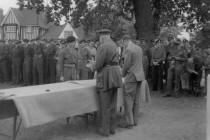
Bisley National Championships
Cdt. Duncan Smith accepting
Inter-Cadet Force medal
2 Oct 1960 |
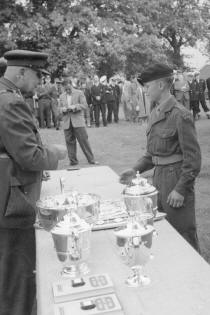
Bisley National Championships
Field Marshal Lord Wilson presenting
Cdt. Duncan Smith with
Inter-Cadet
Force medal | 2 Oct 1960 |
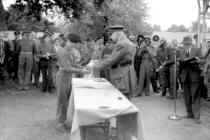
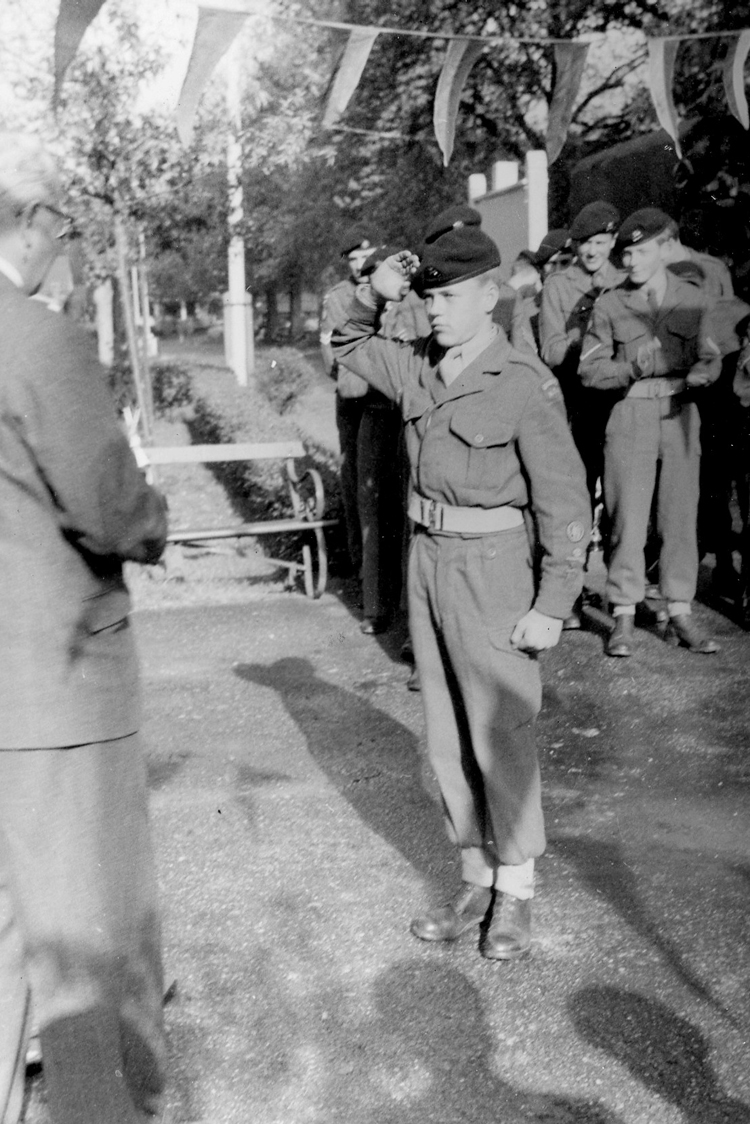
Bisley National Championships
Cdt. Duncan Smith accepting Rifle
Brigade Trophy, Best Army Cadet
shot,
from Field Marshal Lord Wilson
2 0ct 1060 |
|
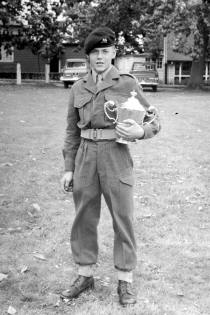
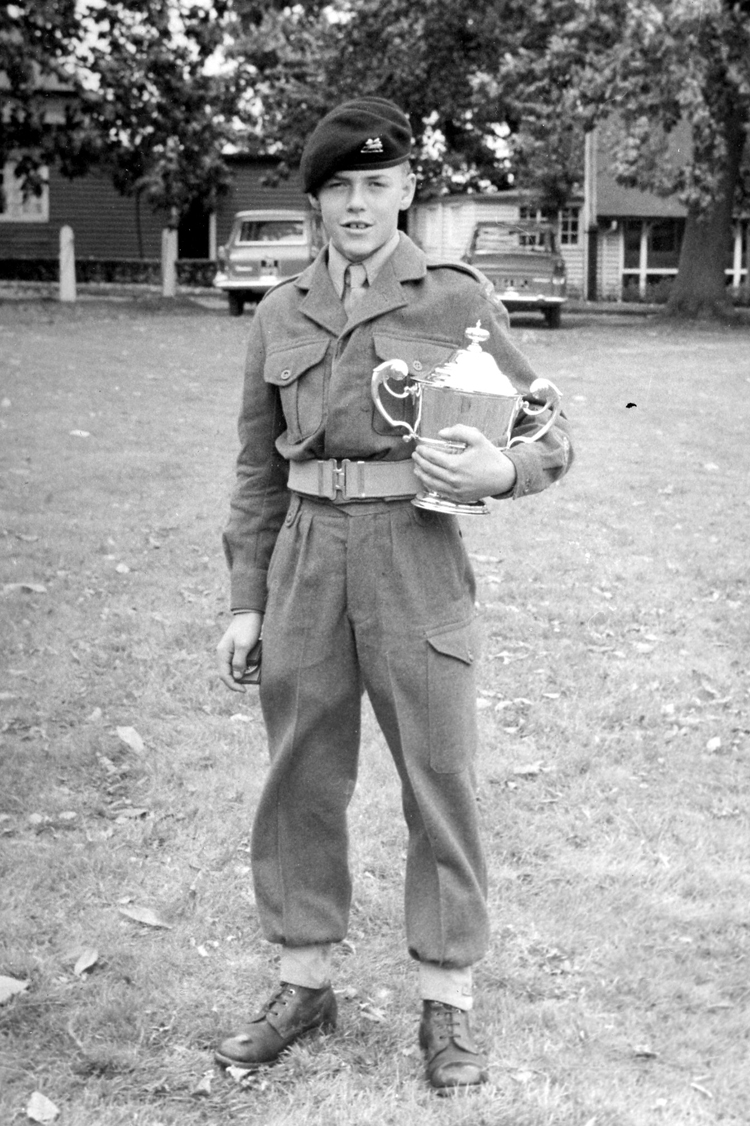
Bisley National Championships
Cdt. Duncan Smith with Rifle Brigade
Trophy for Best Army Cadet
shot
2 Oct 1960 |
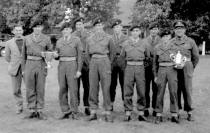
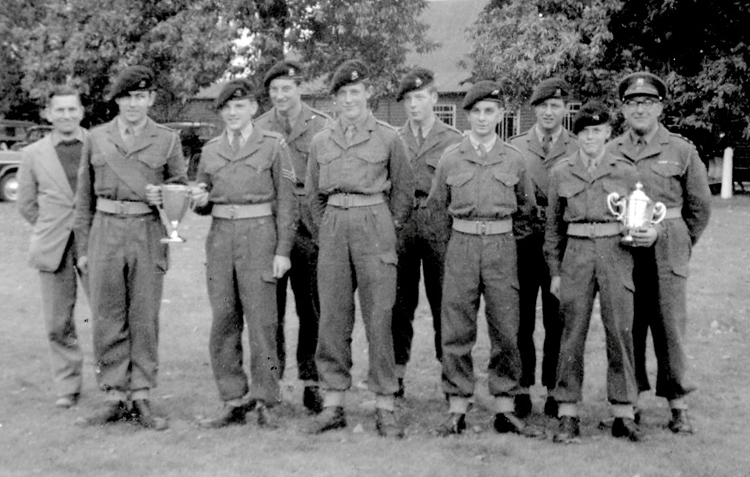
Bisley National Championships
Ruskin Team (from left) Sgts. Tom
Shaw and Dave Martin
holding
Canada Trophy, with Cdt. Duncan
Smith holding Rifle
Brigade Trophy
for the Best Army Cadet shot
2 Oct 1960 |
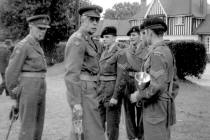
Bisley National Championships
After the presentations, with Colonels
Goad and Power, and (L-to-R)
Sgt.
Tom Shaw, CSM Roy Burton. LCpl.
Dave Money and Sgt. Dave
Martin
2 Oct 1960 |
|
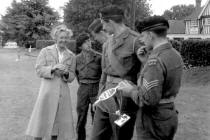
Bisley National Championships
L-to-R: Duncan Smith's mother,
Cdt. Duncan Smith, his brother
Malcolm, Sgts. J. Oliver & Tom Shaw
2 Oct 1960 |
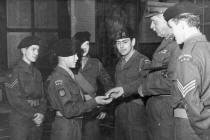
Bisley National Championships
Colonel Power presenting award to
Duncan Smith. L-to-R:
Cpl P Wye,
Sgts. Tom Shaw and A Hawkett
2 Oct 1960 |
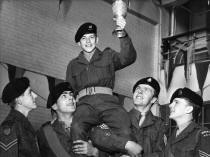
Bisley National Championships
L-to-R: Cpl. P Wye, Sgt. Dave
Martin, Cdt. Duncan Smith,
Sgts.
A. Hawkett
and Tom Shaw
2 Oct 1960 |
|
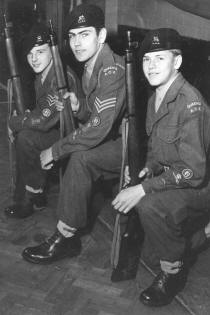
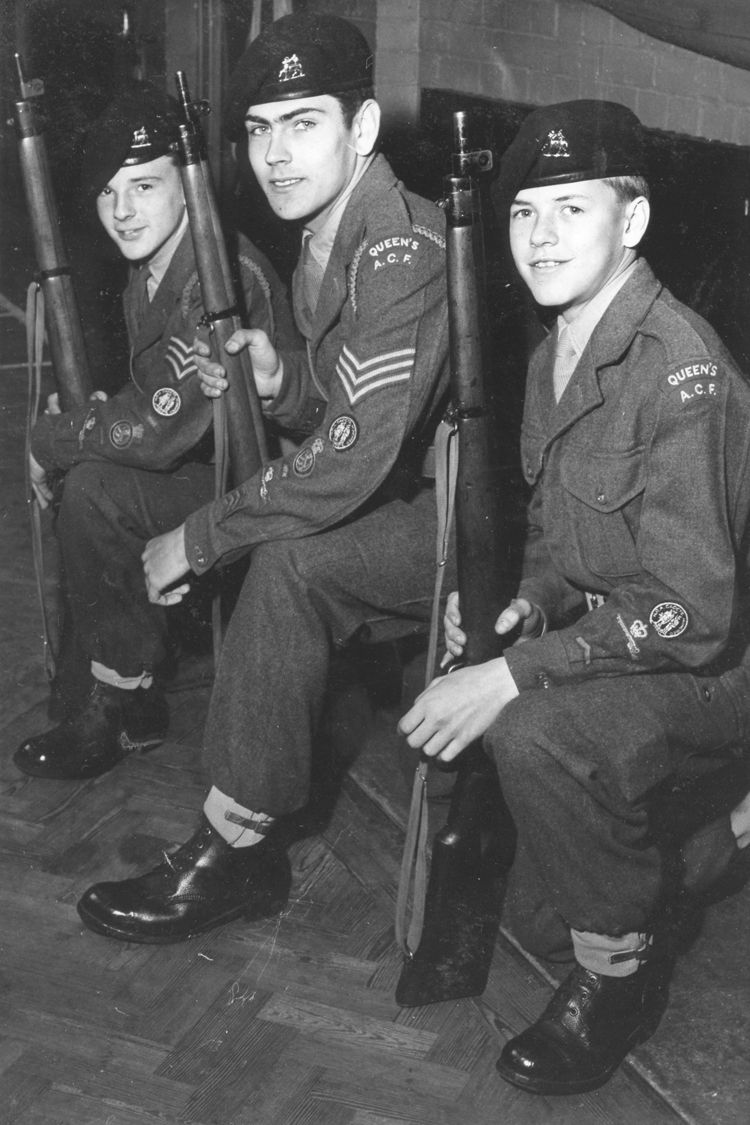
Bisley National Championships
L-to-R: Sgts. Tom Shaw and Dave
Martin with Cdt. Duncan
Smith
2 Oct 1960 |
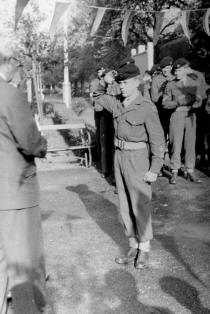
Bisley - Surrey ACF Championship
Cdt. Duncan Smith | 7 May 1961 |
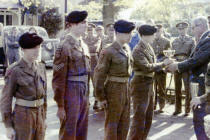
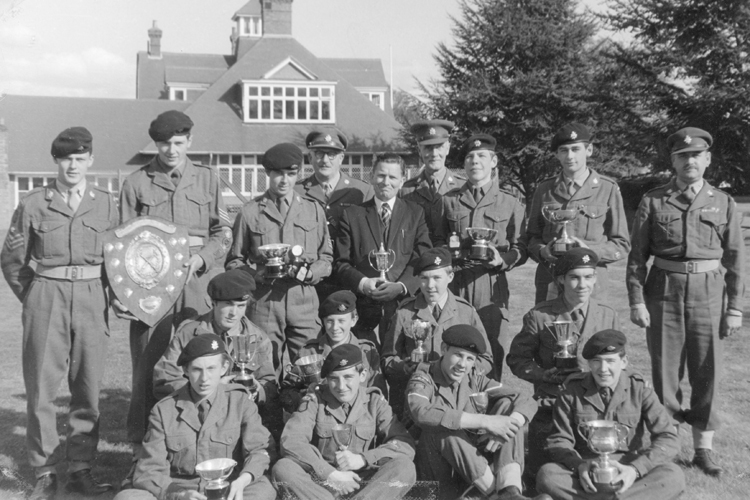
Bisley - Surrey ACF Championships
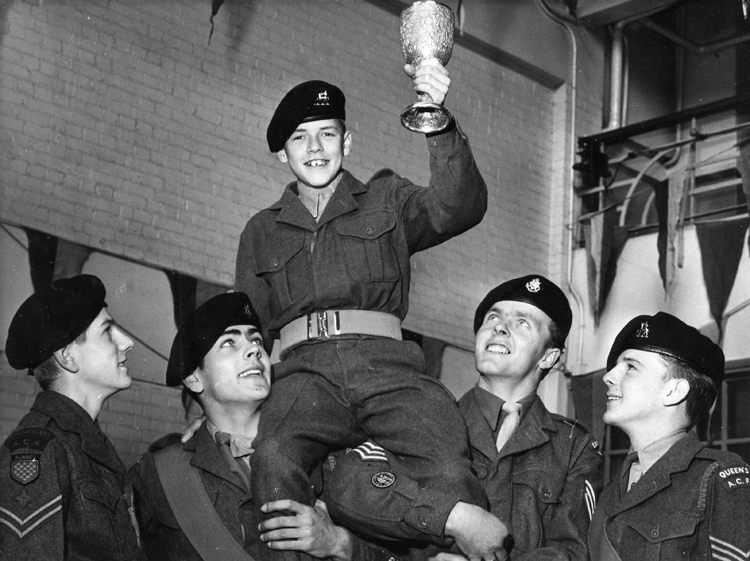
A team collects yet another trophy!
L-to-R: Cdt. Duncan Smith, Sgts. Ray
Humphries, Dave
Martin and
Tom Shaw | 7 May 1961 |
|
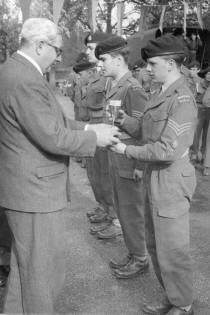
Bisley - Surrey ACF
Championships
A Team with another trophy!
L-to-R: Cdt. Duncan Smith, Sgts.
Ray Humphries, Dave
Martin and
Tom Shaw | 7 May 1961 |
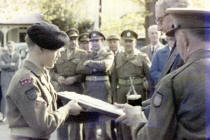
Bisley - Surrey ACF Championships
Cdt. Duncan Smith receiving
Champion at Arms Shield
for best shot | 7 May 1961 |
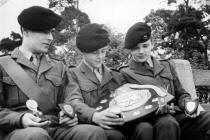
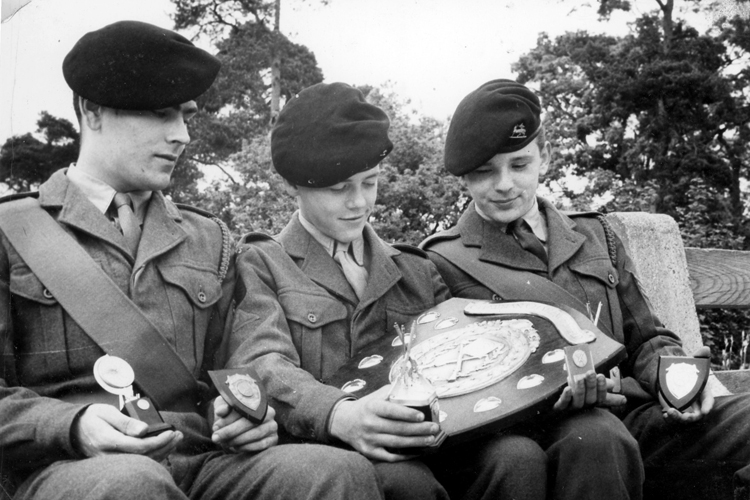
Bisley - Surrey ACF Championships
L-to-R: Sgt. Dave Martin,
Cdt.
Duncan Smith and Sgt. Tom Shaw,
with their shooting trophies
7 May 1961 |
|
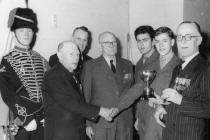
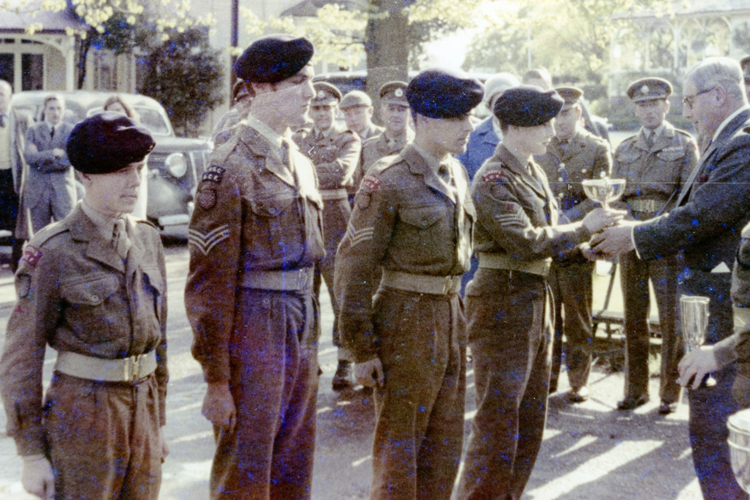
Presentation to Cdt. Duncan Smith
of Old Contemptibles Cup for best
overall shot in competition,
with
runner-up Sgt. Dave Martin
to his right | 7 May 1962 |
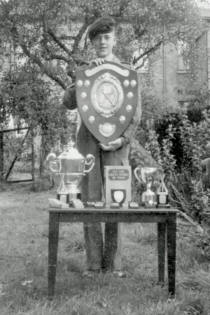
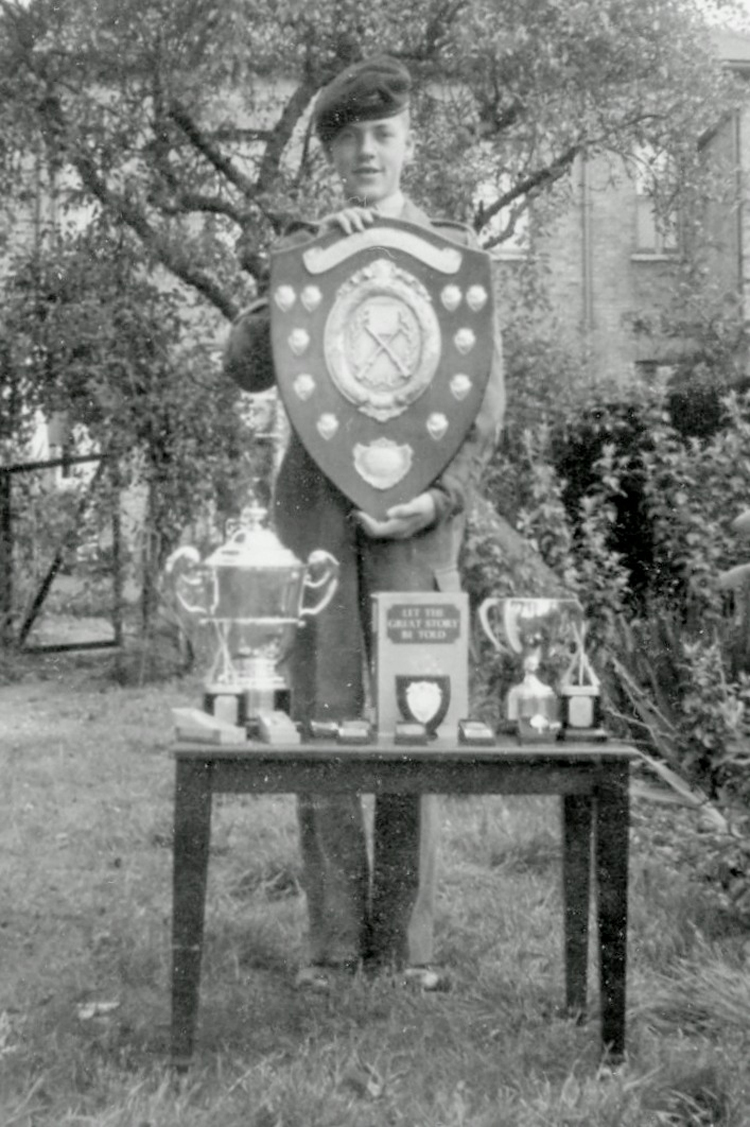
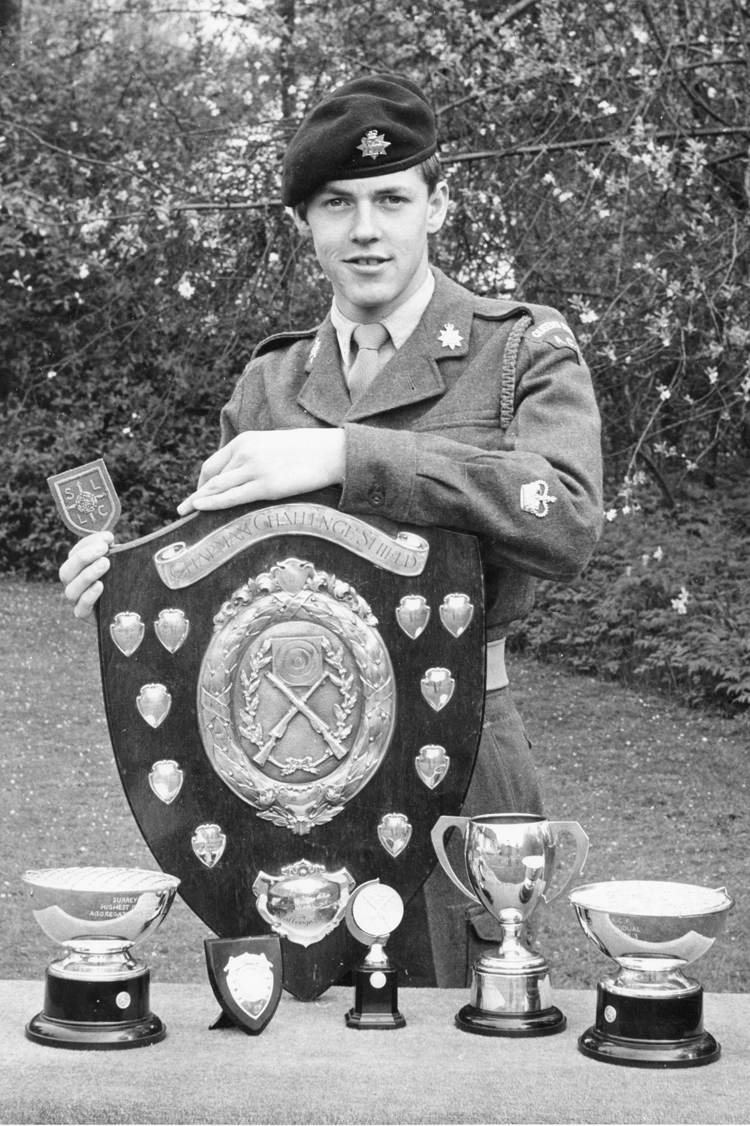
Cdt. Duncan Smith's shooting
trophies won between October
1960 and September 1961 |
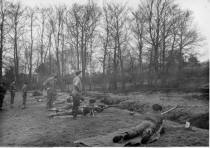
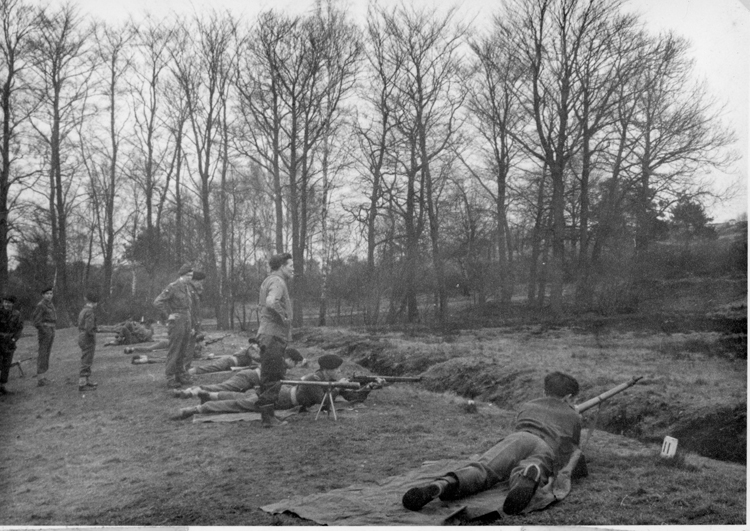
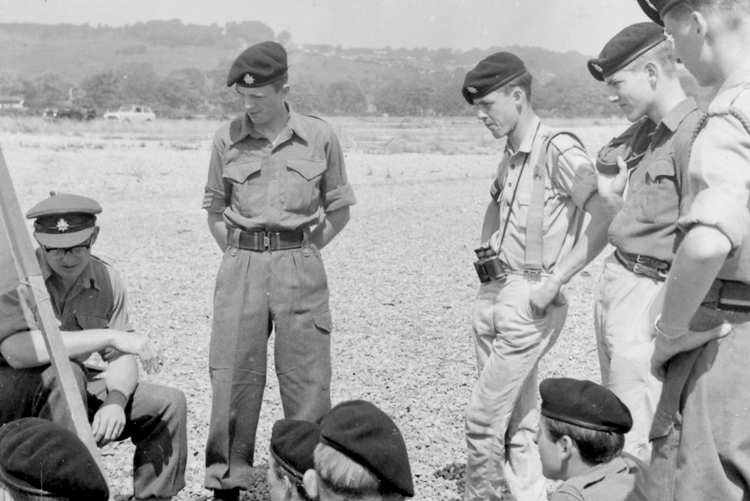
Practice shoot | 1961 |
|
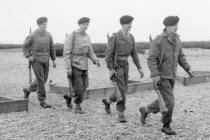
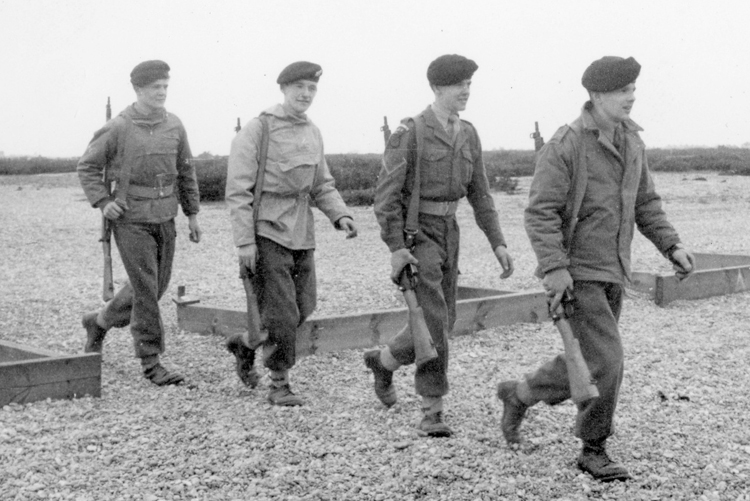
ACF A Team at Folkestone shoot
L-to-R: Muckleston, A. Carnell,
Duncan Smith and Tom Shaw
1962 |
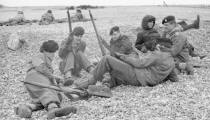
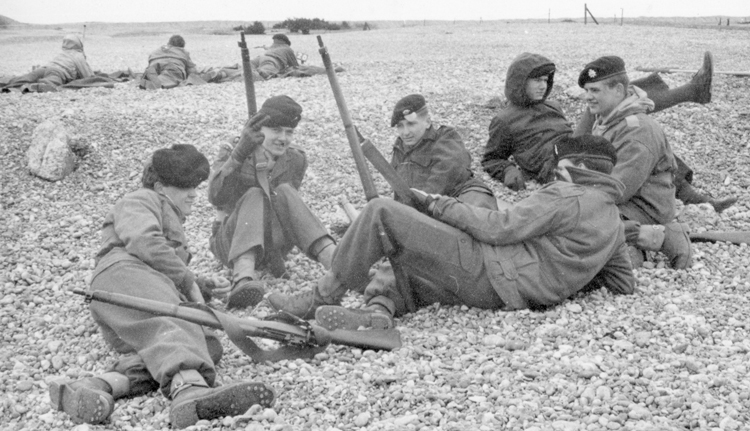
Folkestone shoot
L-to-R: Muckleston, Duncan Smith,
Ray O'Leary,
unknown,
unknown
and Richard Elford | 1962 |
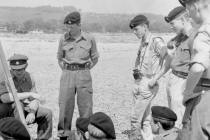
Folkestone shoot | 1962 |
|
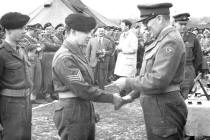
Folkestone shoot Prize-giving
L-to-R: LCpl. Duncan Smith
and Sgt. Tom Shaw | 1962 |
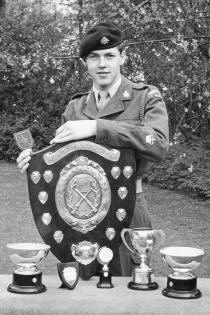
Bisley - Surrey County Cadet
Meeting
CSM Duncan Smith. winning
Trophies | 2 May 1964 |
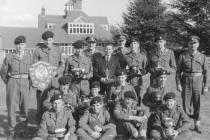
Bisley - Surrey County Cadet
Meeting
Back row: Sgts. D. Smith, Ian
Macdonald & G. Strelczuk, with
Major
Ron Nebel, John Martin (coach),
Col. Goad, Cdt. Nick
Williams, Cdt. Chris Hunneyball & Capt. Hunneyball.
Middle row:
unknown,
unknown, Cdt.
Fishenden (JRGS) and
unknown.
Front row:
unknown, Cdt.
Baker (JRGS), Cdt. Willis (Shirley Sec) and
unknown
2 May 1964 |
|
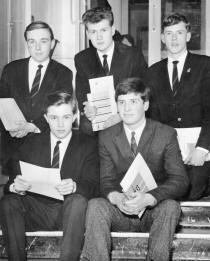
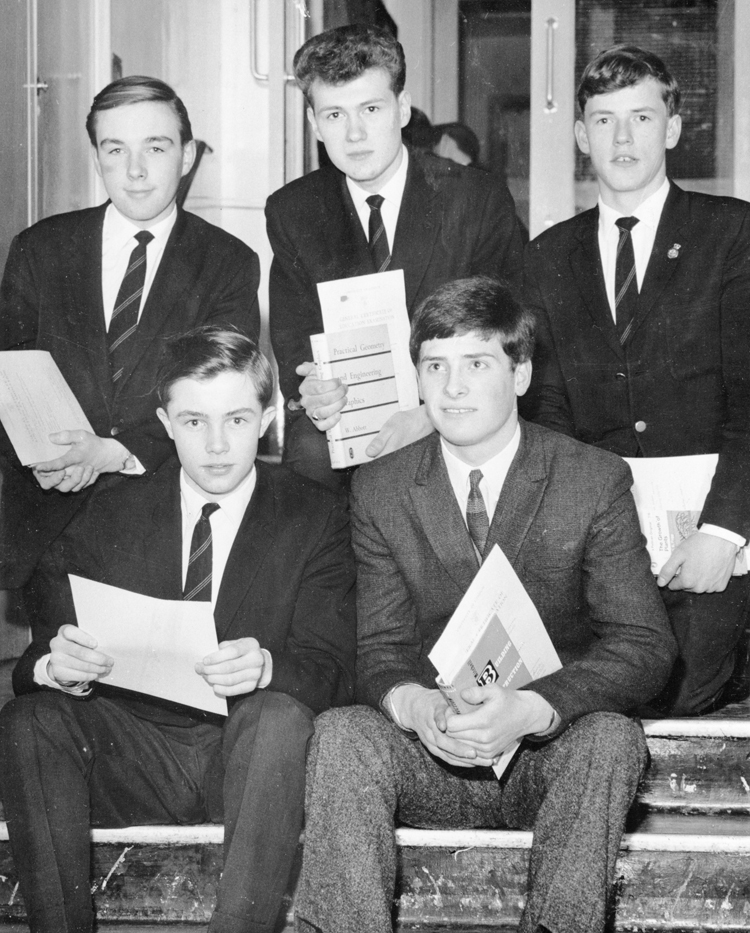
Prize-giving at John Ruskin 1963
L-to-R: B. Lee, P. Thomas, N. Hunt,
A. Booker, Duncan Smith |
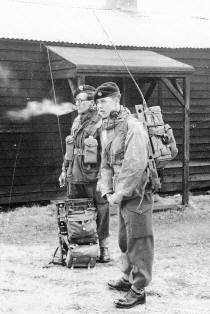
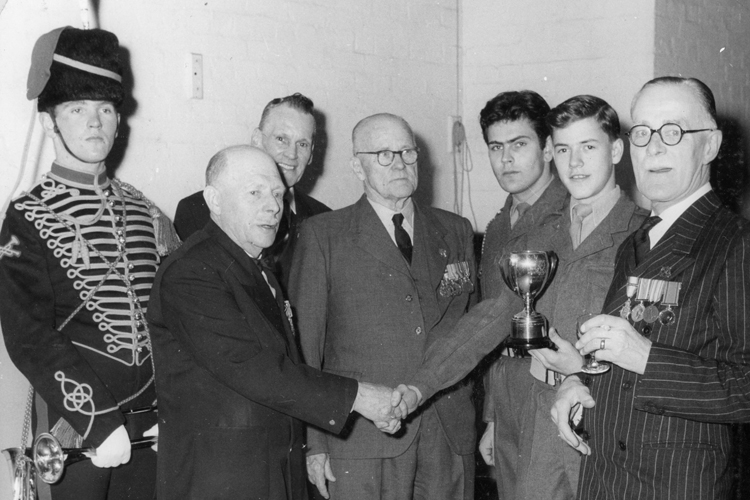
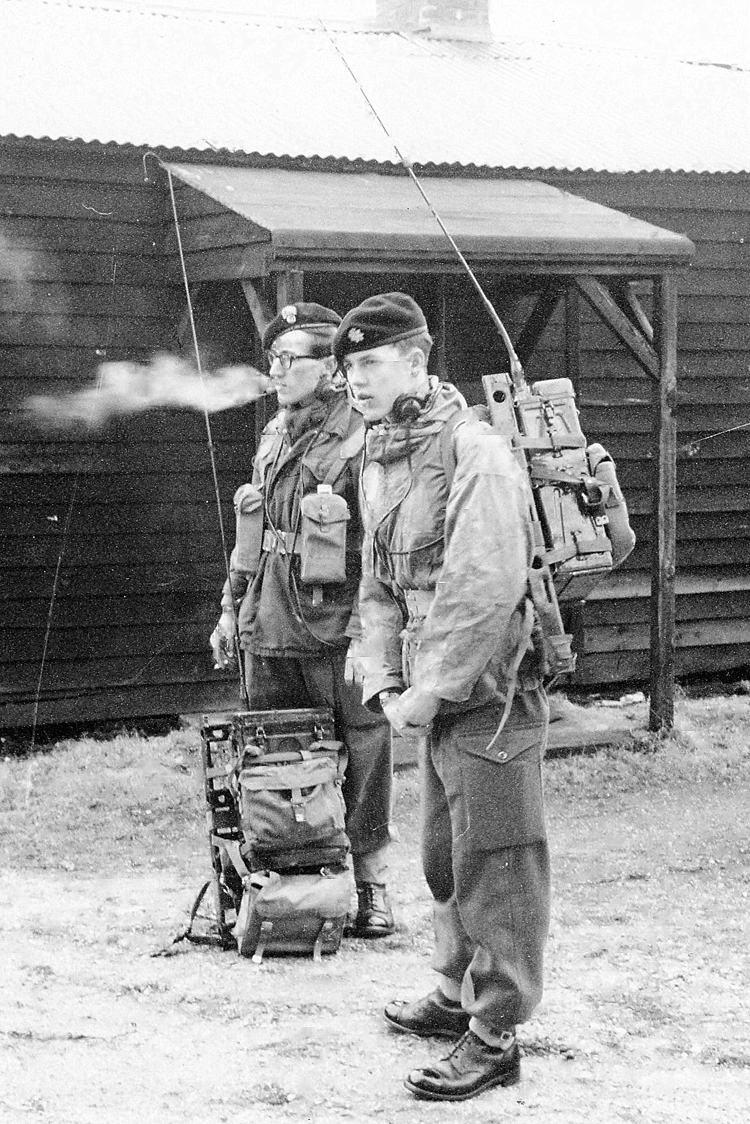
CSM Duncan Smith on Signals Course
with Honourable Artillery Company |
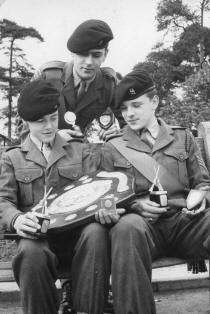
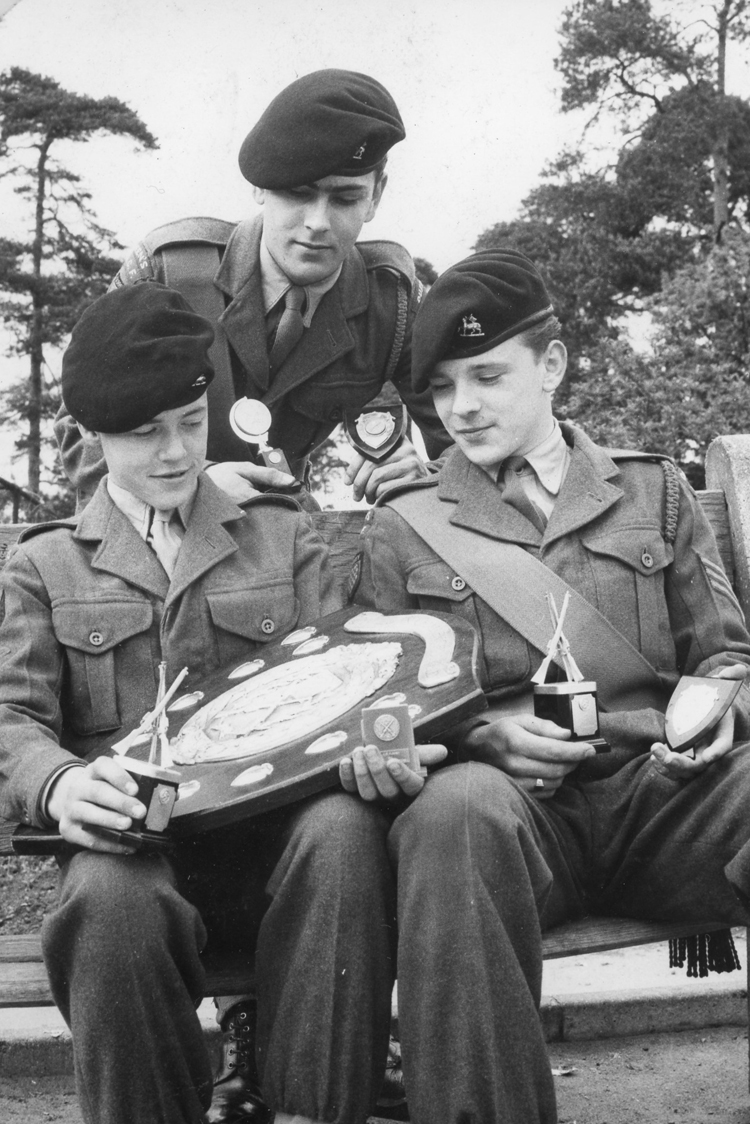
L-to-R: Cdt. Duncan Smith,
plus Sgts.
Dave Martin and Tom Shaw with their
trophies for
shooting |
|
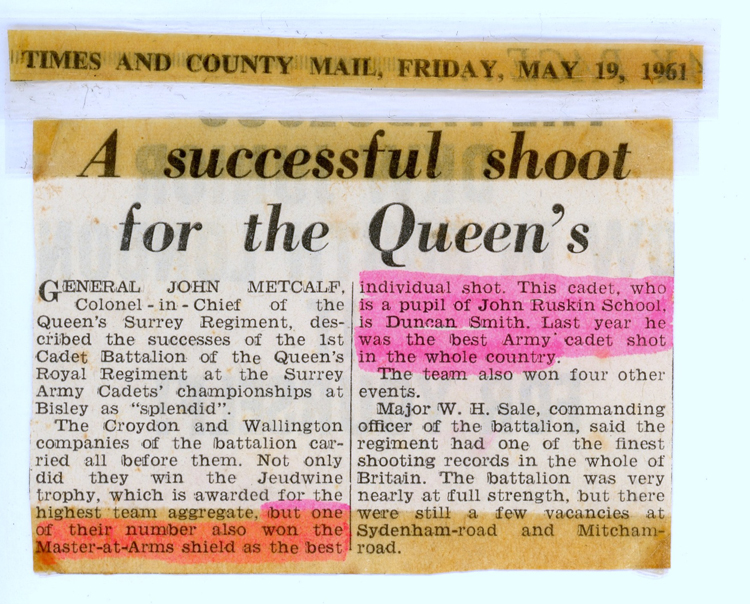
Newspaper cuttings
about successful ACF shoots at Bisley during Sixties |
|
 |
 |
 |
|
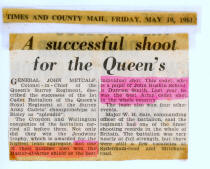
18 May 1962 |
Bisley - National Championships
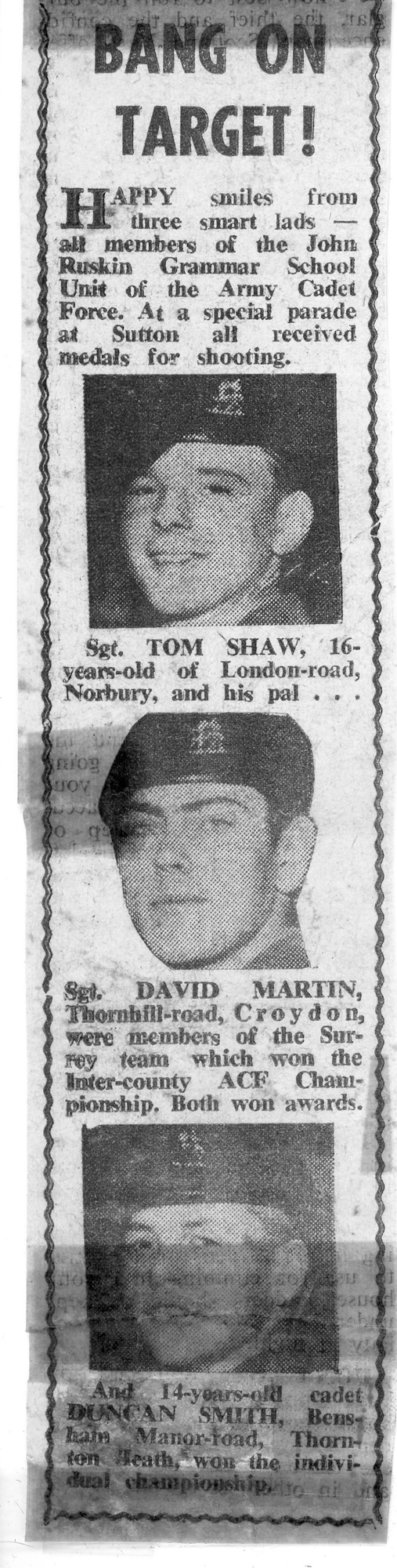
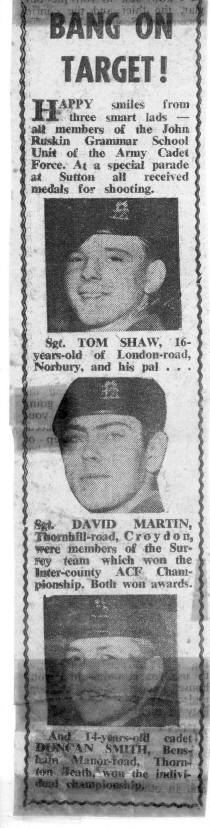
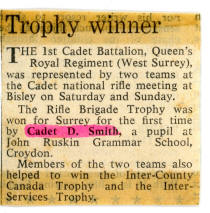
Tom, Dave and Me| 2. Oct 1960 |
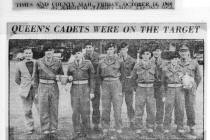
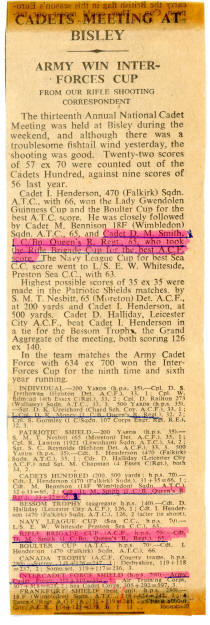
Bisley - National Championships
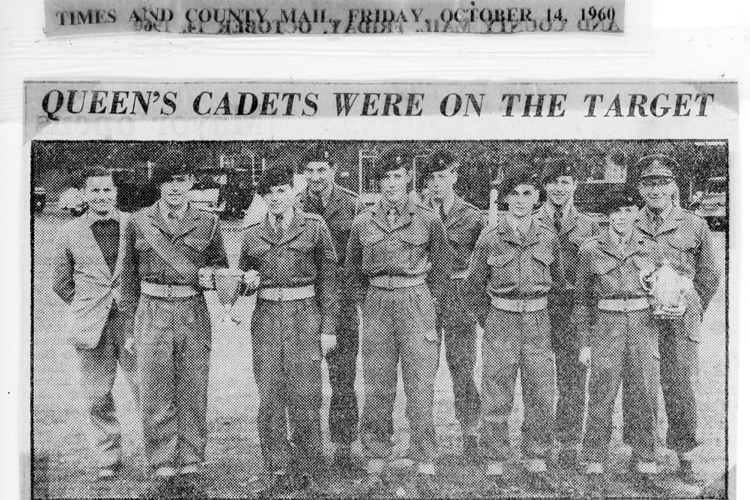
Times and County Mail | 14 Oct 1960 |
|
 |
 |
 |
|
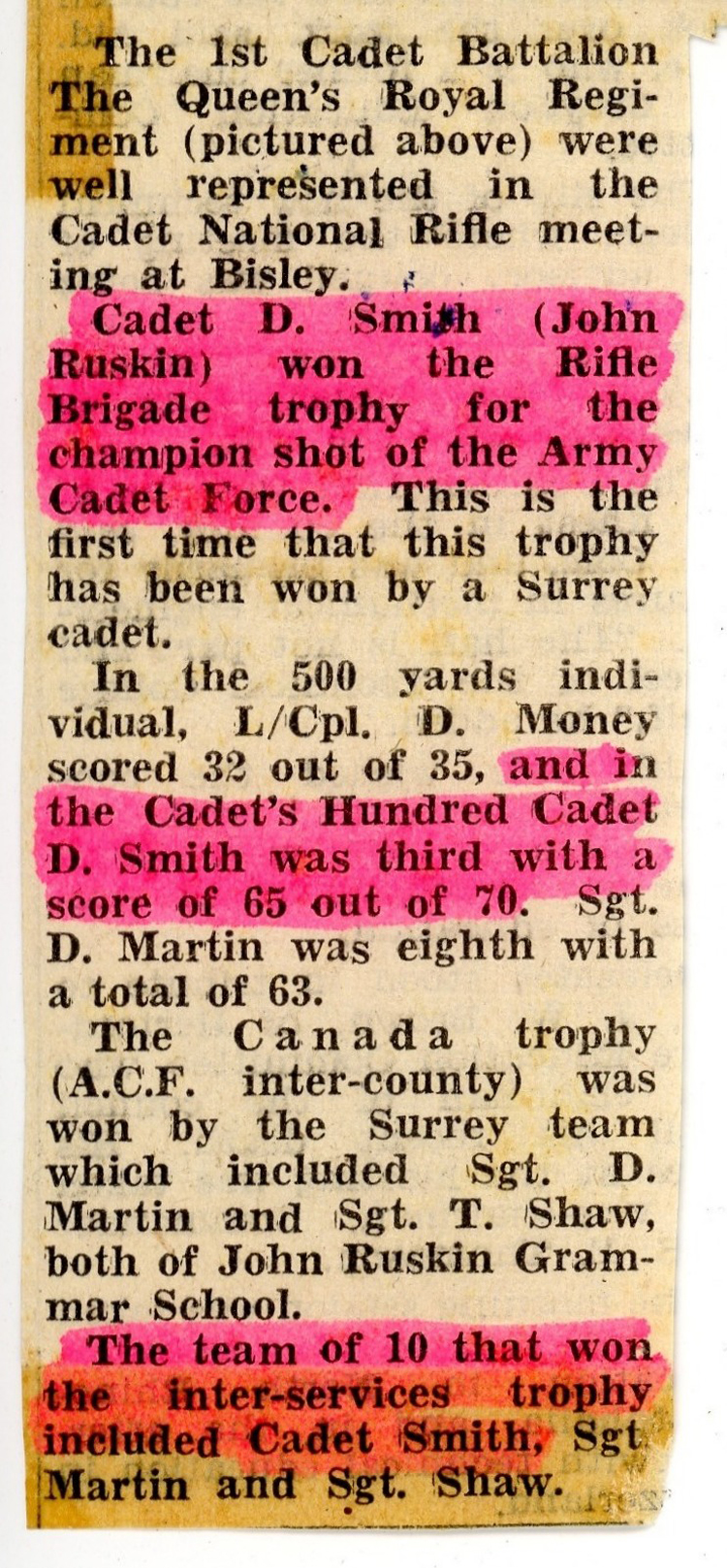
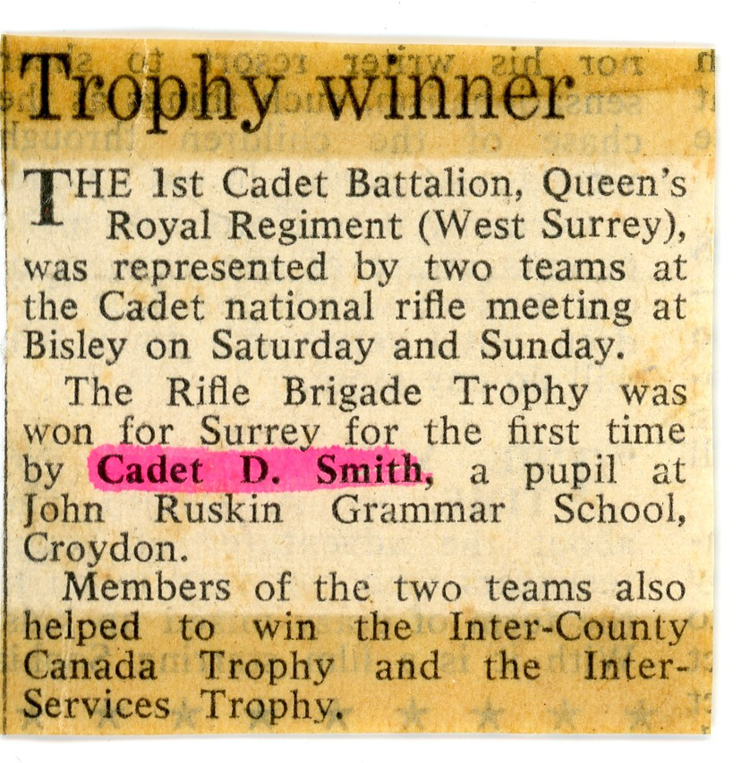
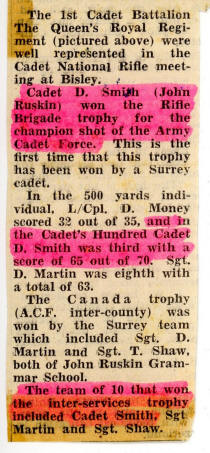
Bisley - National Championships
Times and County Mail | 14 Oct 1960 |
Bisley National Championships
14 Oct 1960 |
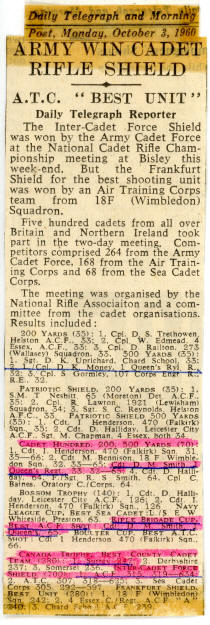
Bisley National Championships
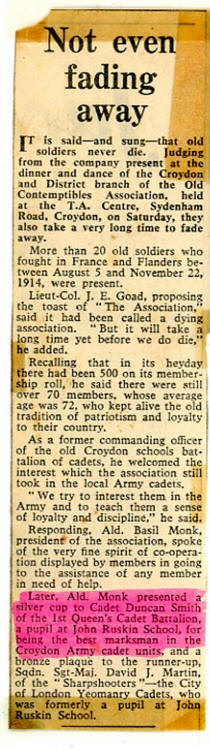
Times newspaper | 3 Oct 1960 |
|
 |
 |
 |
|
Bisley National Championships
Telegraph & Morning Post | 3 Oct 1960 |
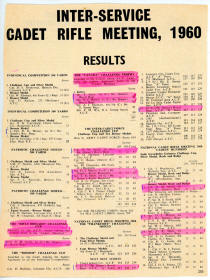
Bisley National Championships
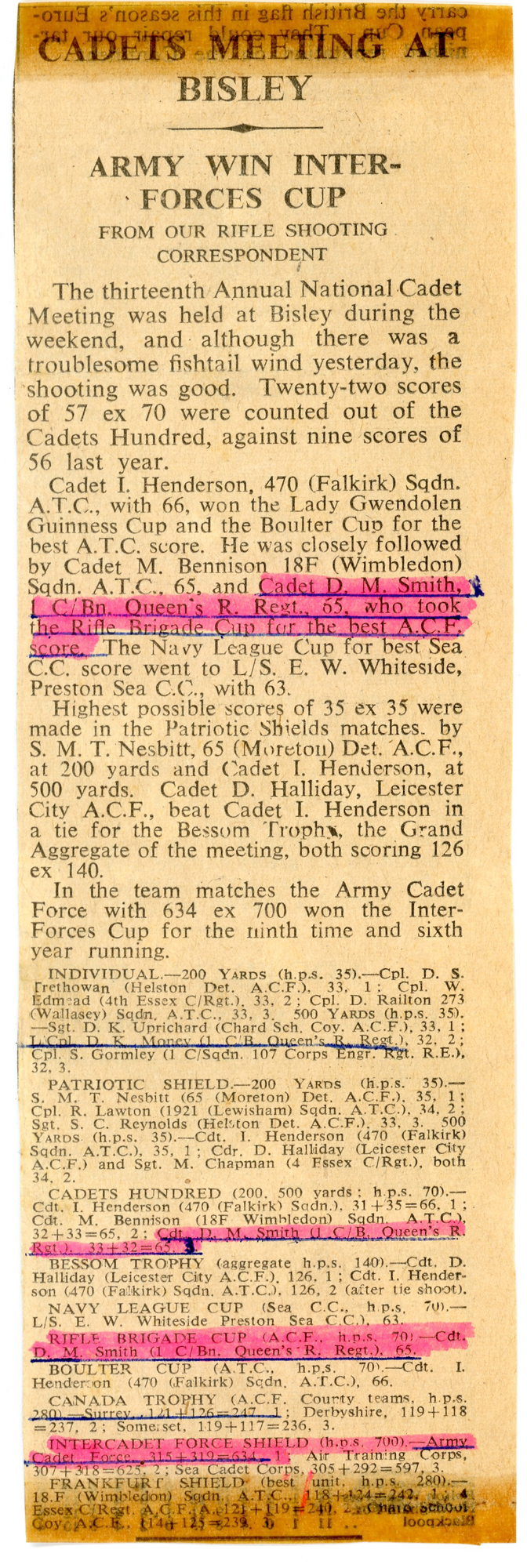
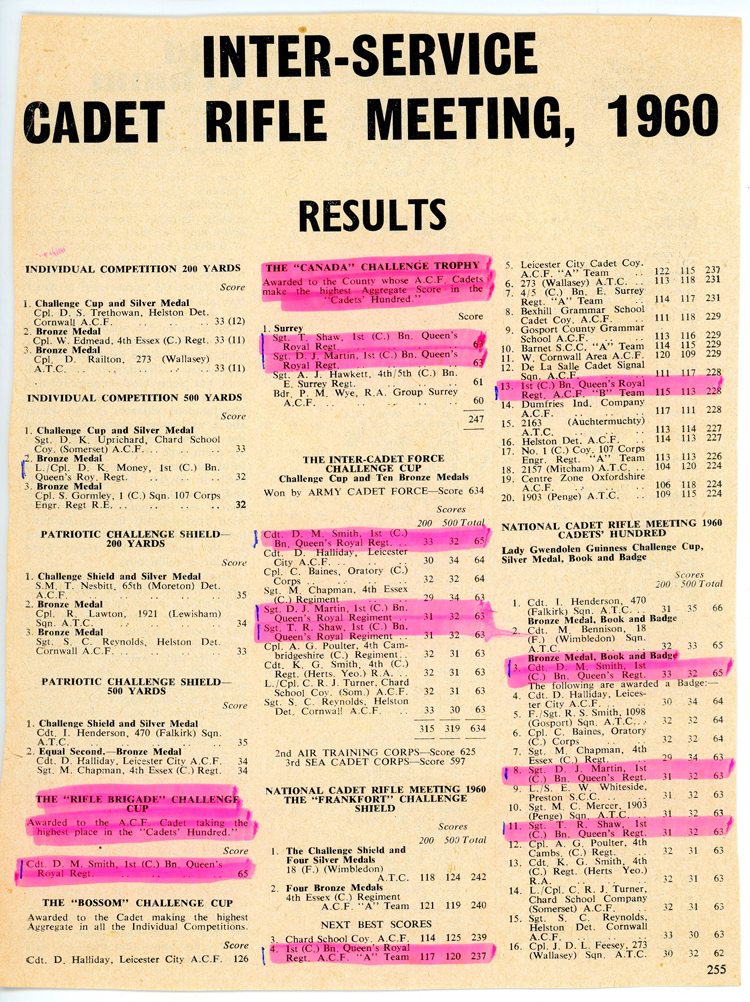
Results | 2 Oct 1960 |
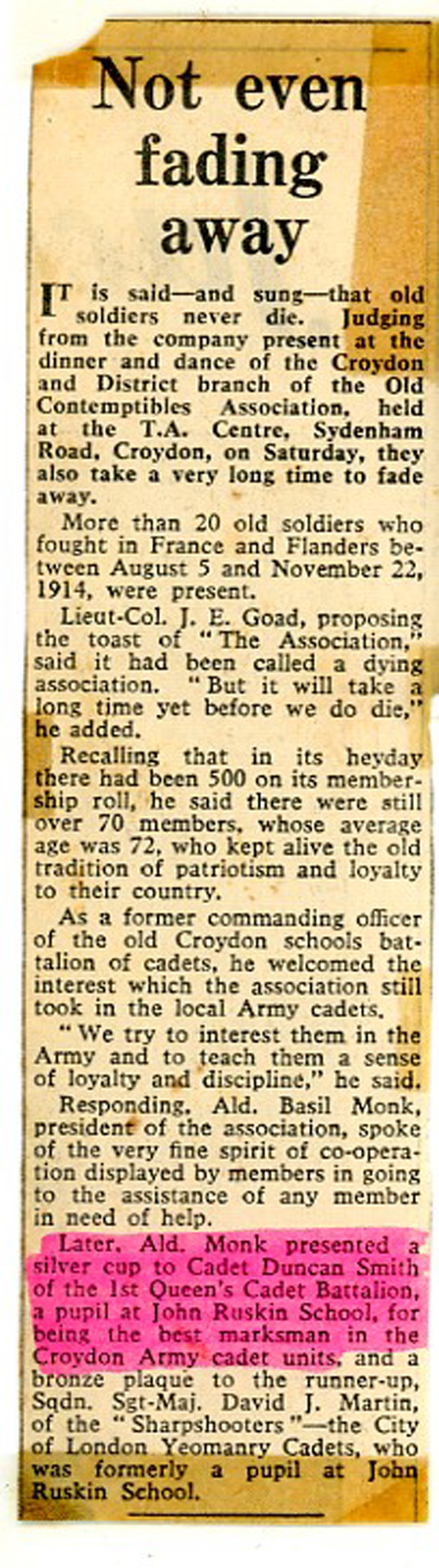
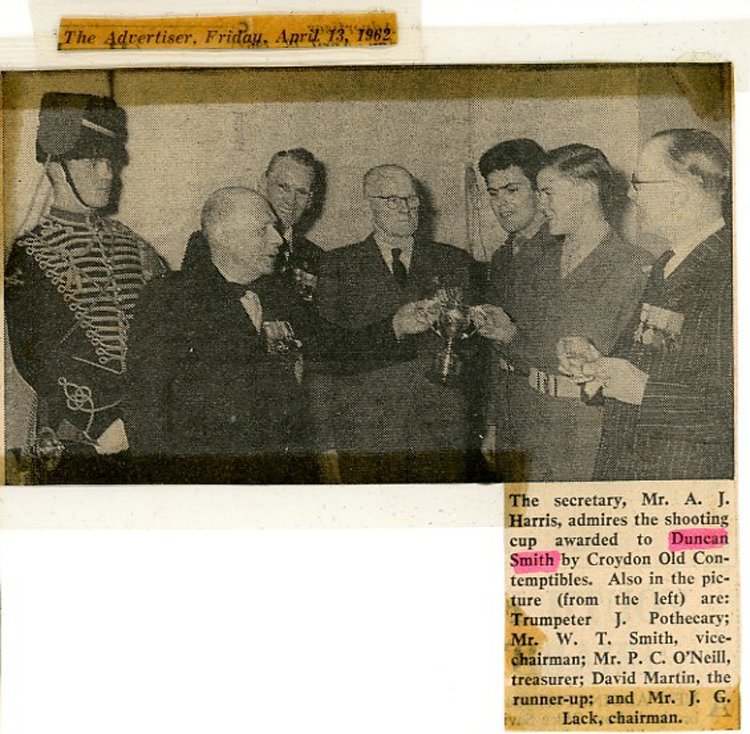
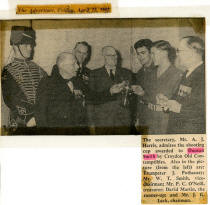
Presentation of Old
Contemptibles Cup | 7 May 1962 |
|
 |
 |
 |
|
Presentation of Old
Contemptibles Cup | 7 Apr 1962 |
Bisley - Surrey County Cadet
Meeting results
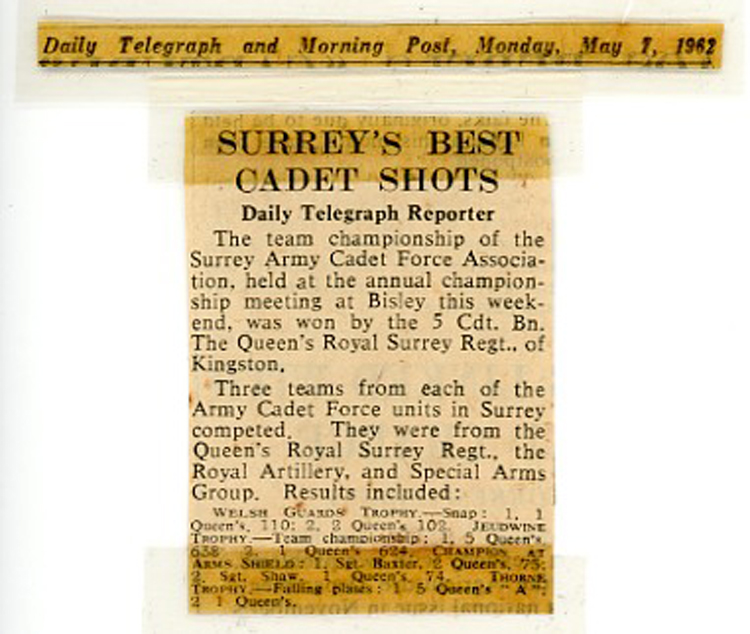
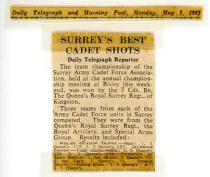
The Telegraph | 5 May 1962. |
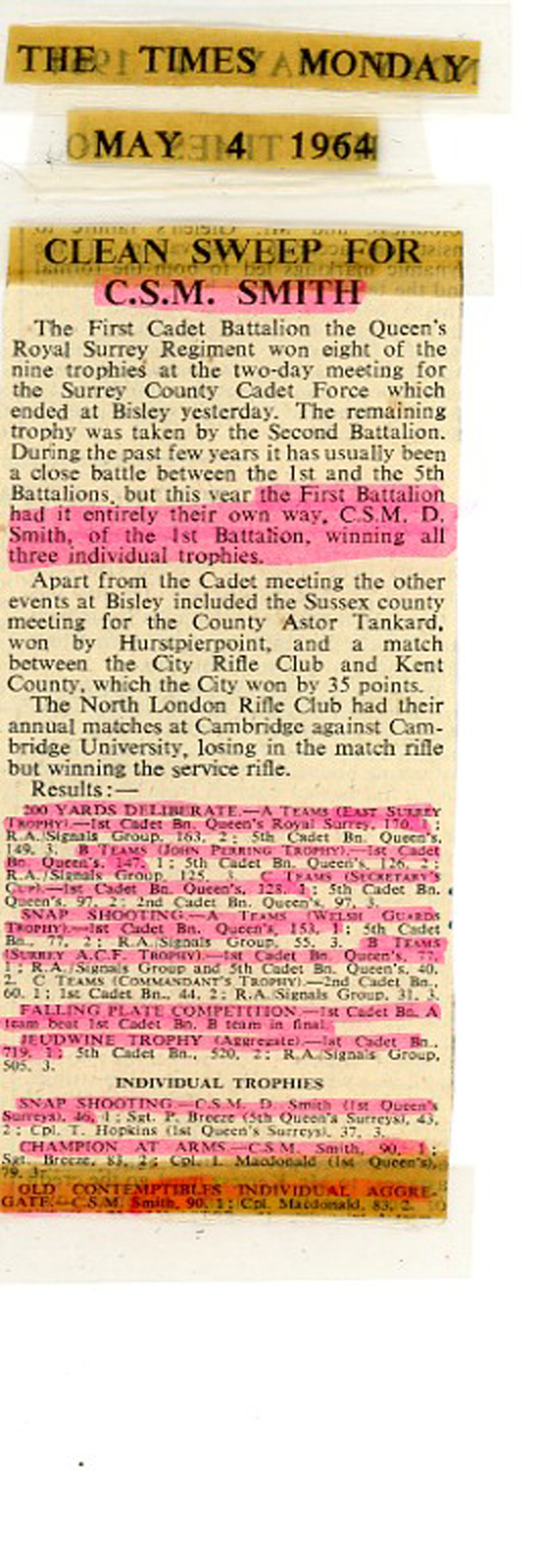
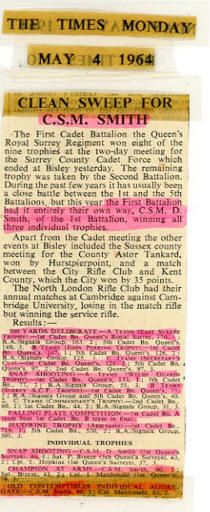
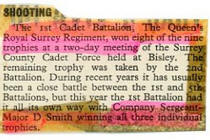
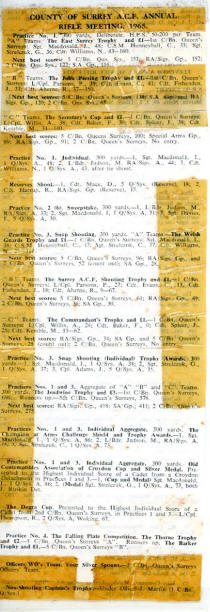
Bisley - Surrey County Cadet
Meeting results
The Times | 2May 1964 |
|
 |
 |
 |
|
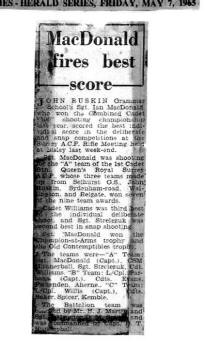
Bisley - Surrey County Cadet
Meeting
2 May 1964 |
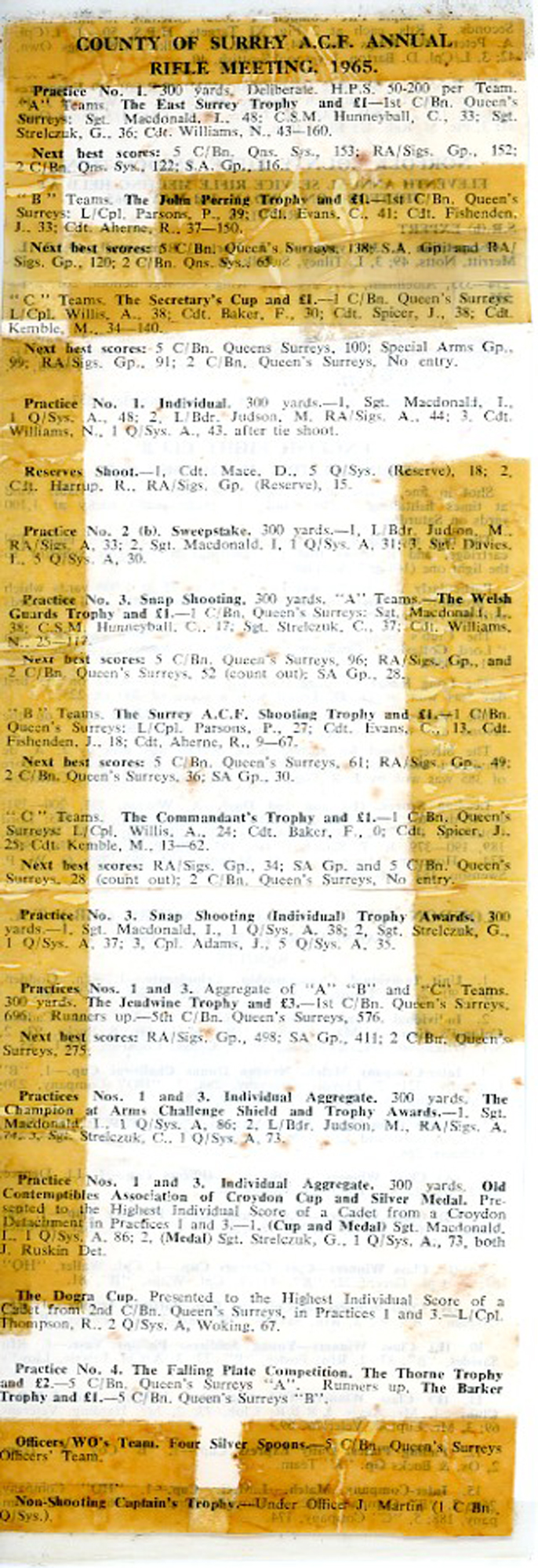
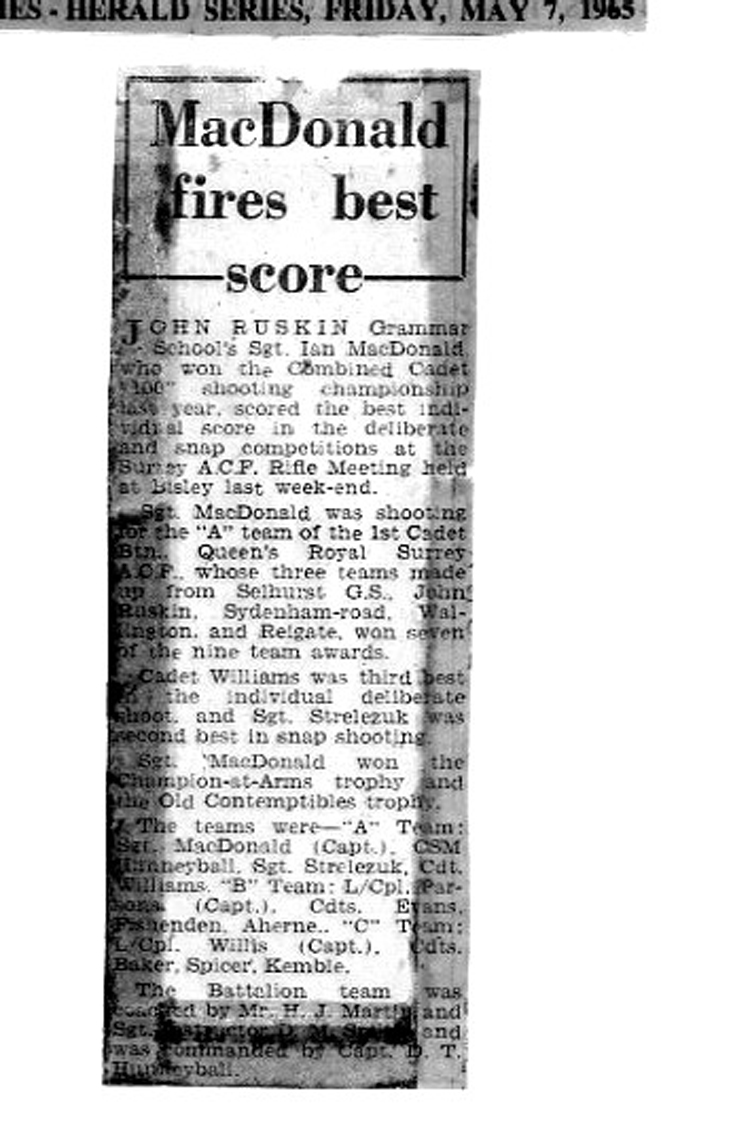
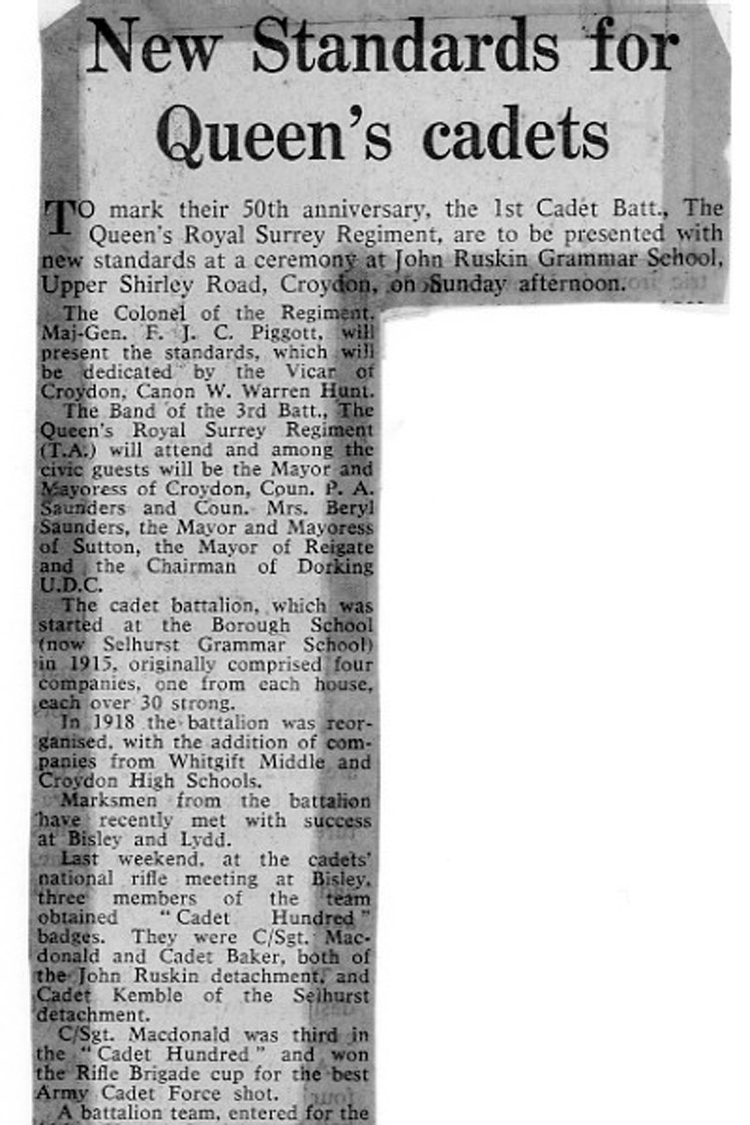
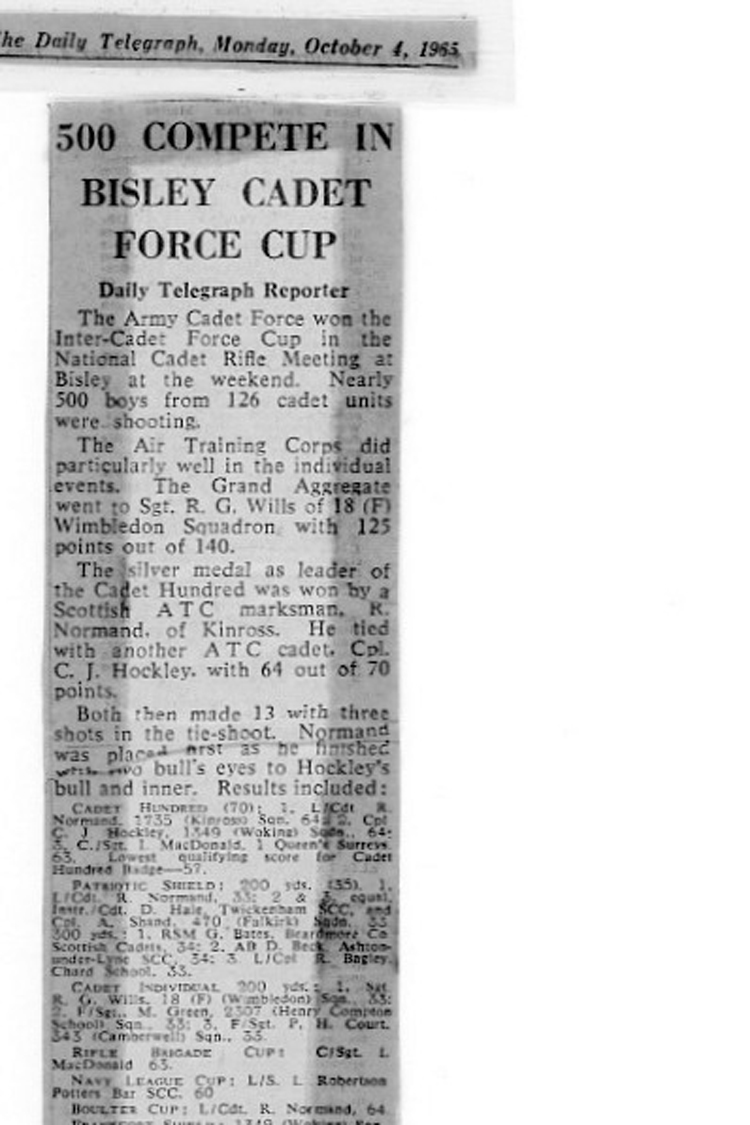
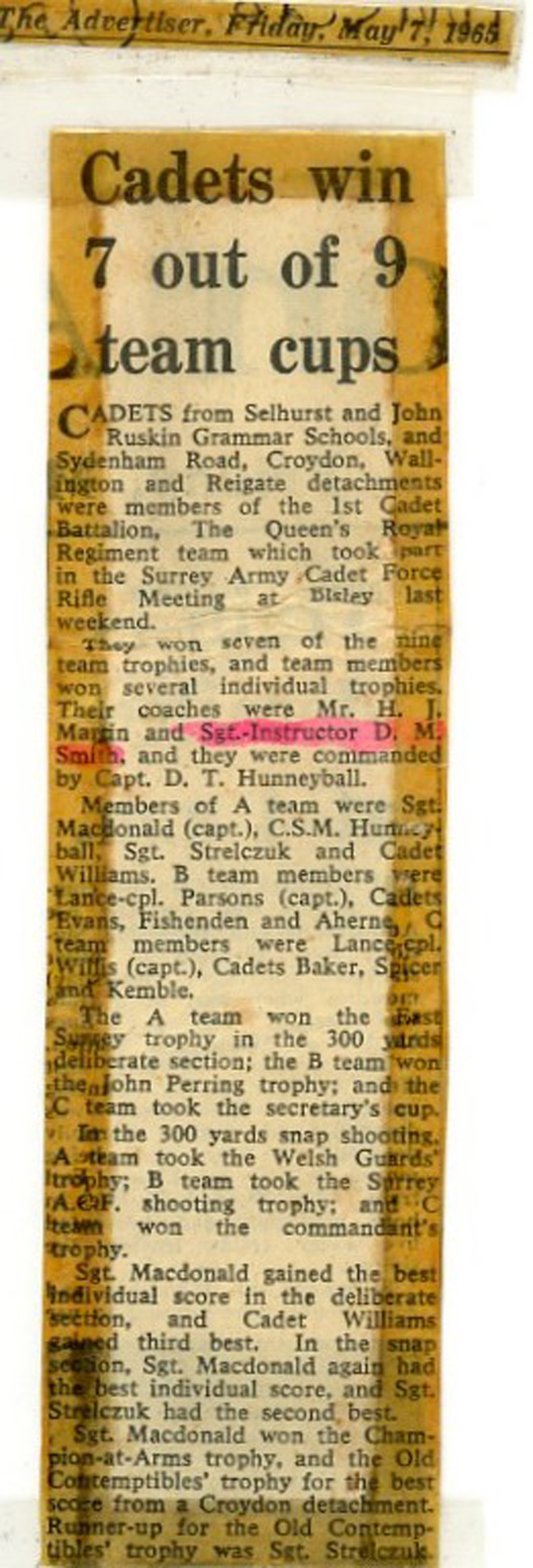
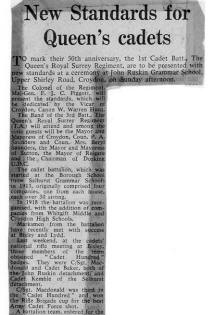
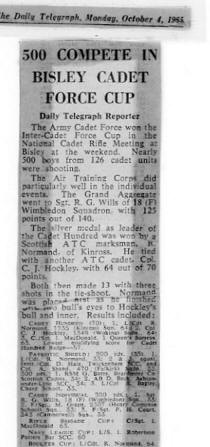
Nationals Results - 1965 |
Nationals Results - 1965
Times Herald |
|
 |
 |
 |
|
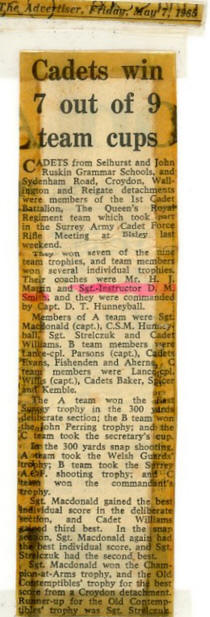
Nationals Results - 1965 |
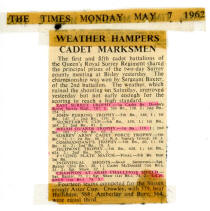
Nationals Results - 1965 |
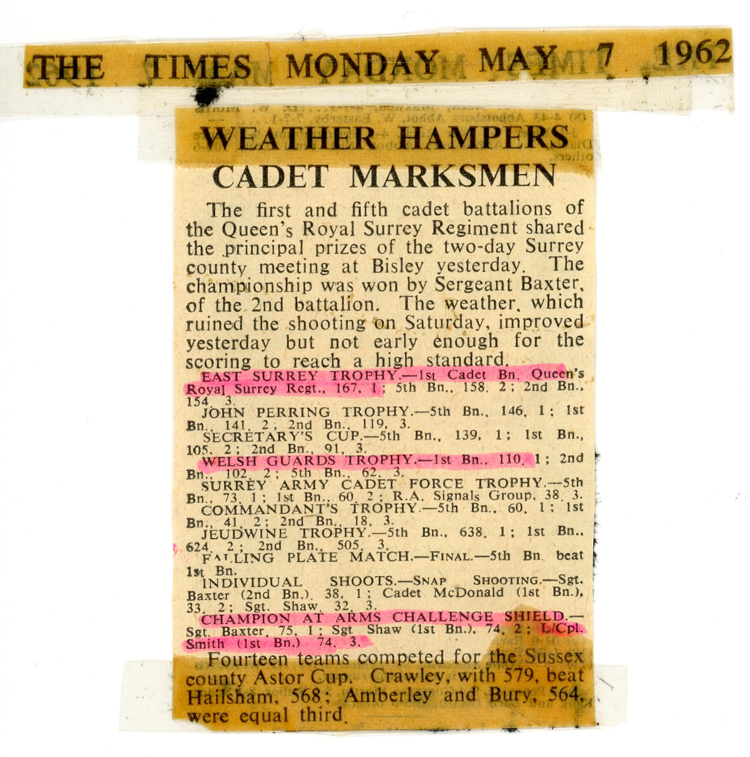
7 May 1962 |
|
 |
 |
 |
|
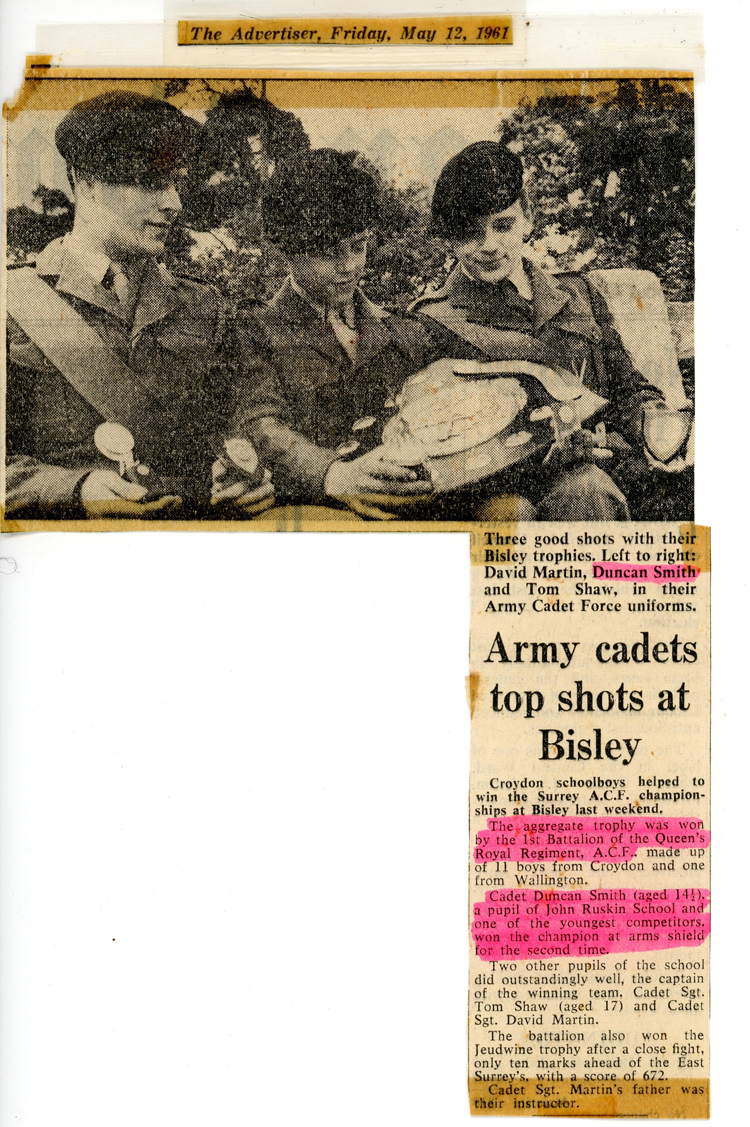
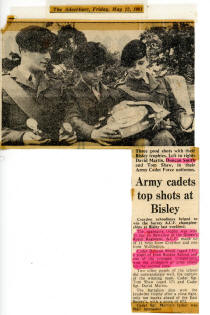
12 May 1961 |
12 May 1961 |
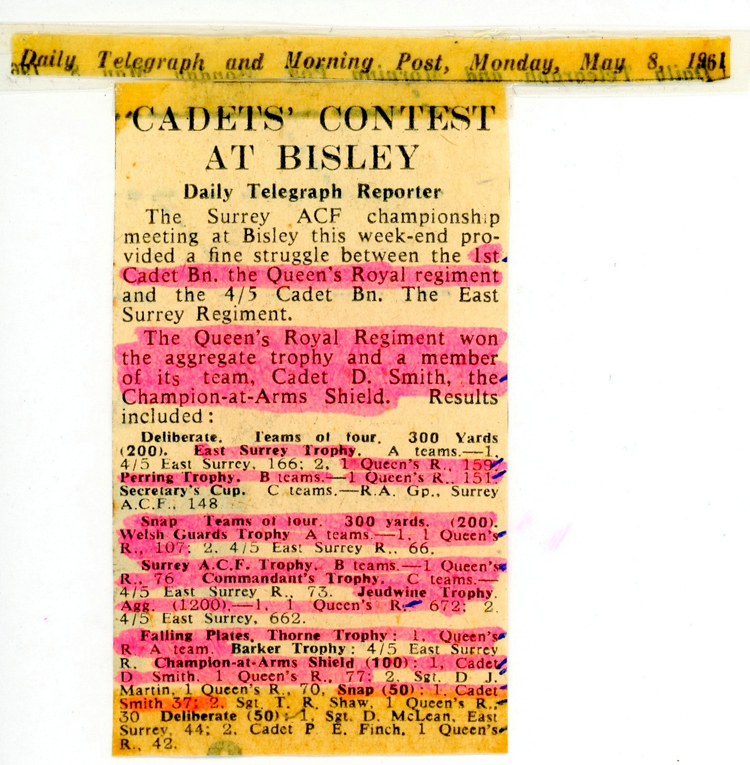
Surrey ACF Championship
results in Daily Telegraph article
8 May 1961 |
|
 |
 |
 |
|
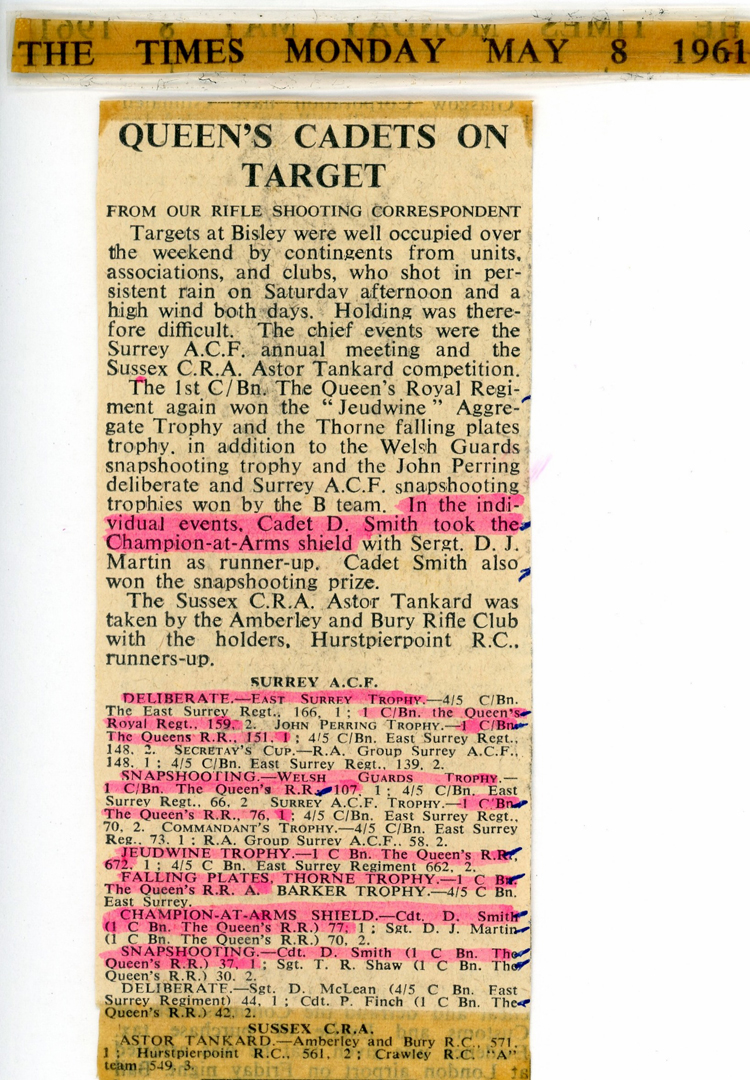
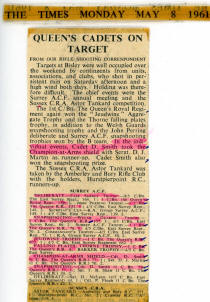
Surrey ACF Championship
results in The Times article
7 May 1961 |
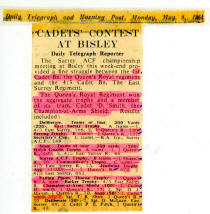
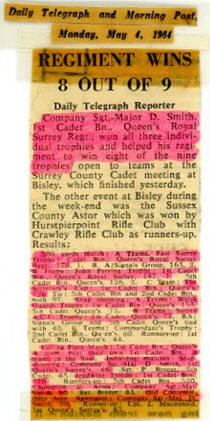
Bisley - Surrey County Cadet
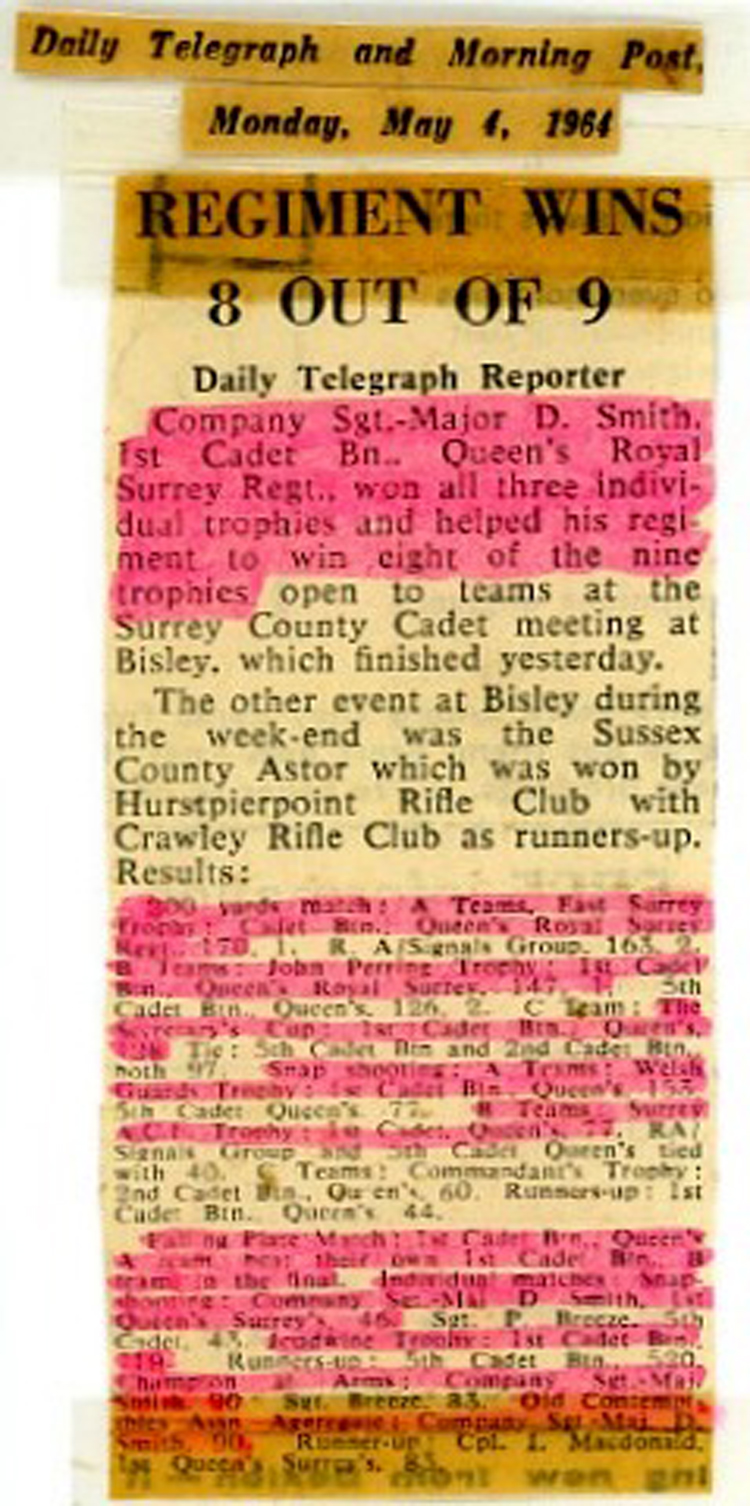
Meeting report in Daily Telegraph
2 May 1964 |
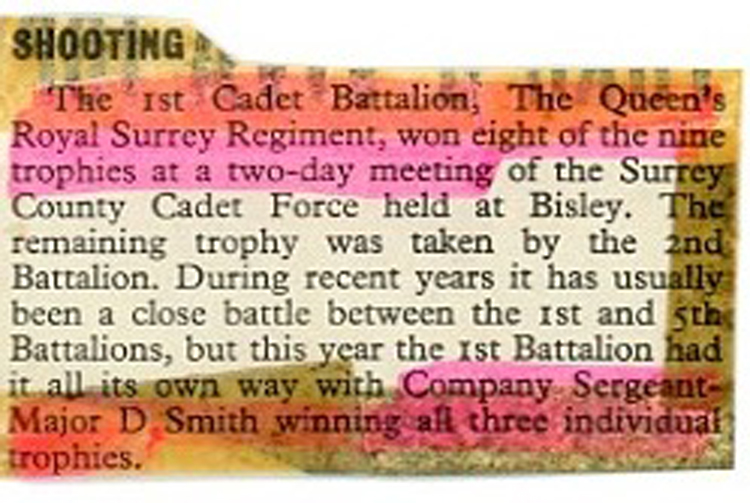
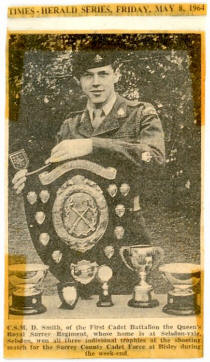
Bisley - Surrey County Cadet
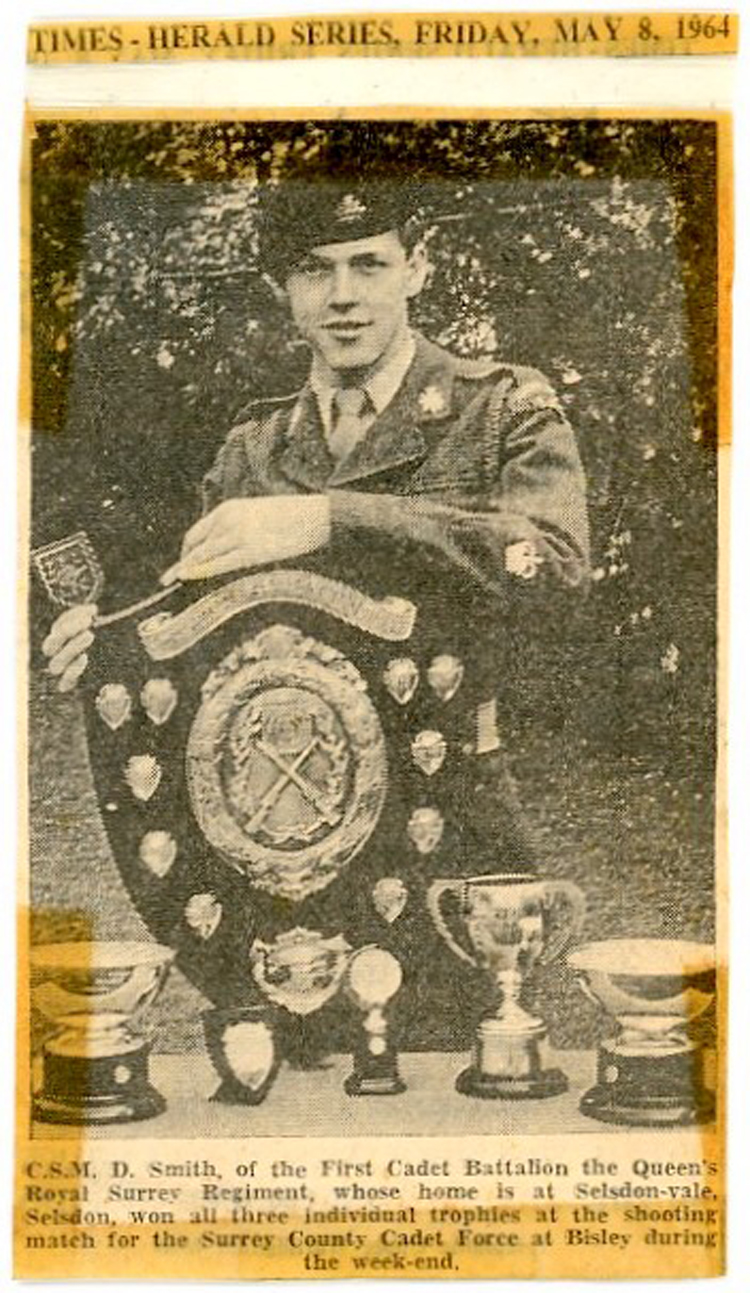
Meeting report in Times Herald
2 May 1964 |
|
Letters and other
correspondence about ACF shoots at Bisley during Sixties |
|
 |
 |
 |
|
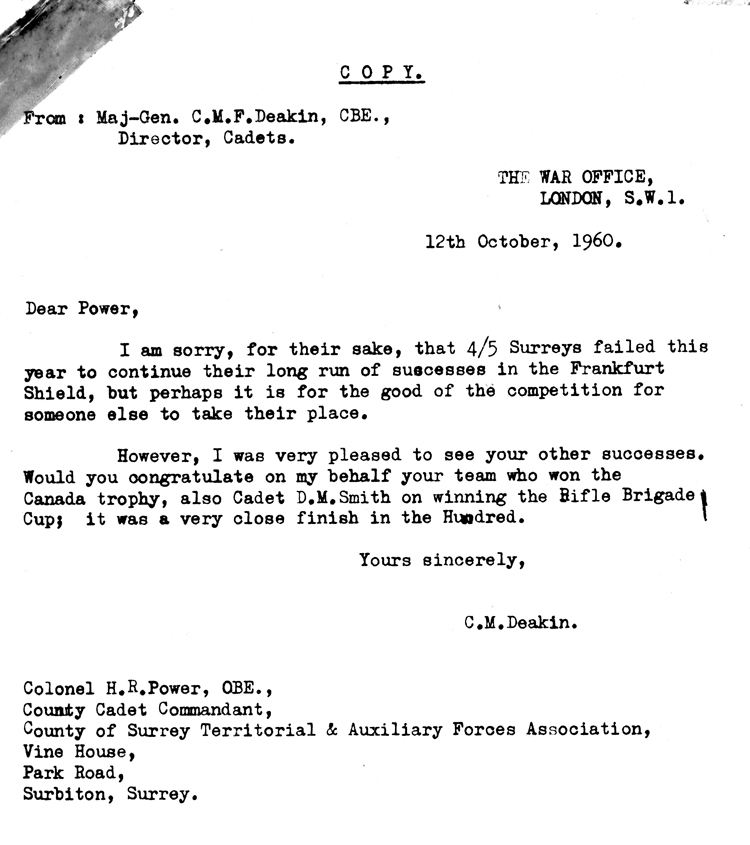
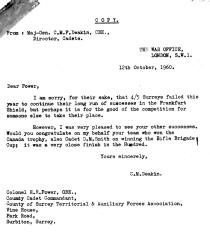
Response from The War Office HQ
regarding Nationals results 1960
12 Oct 1960 |
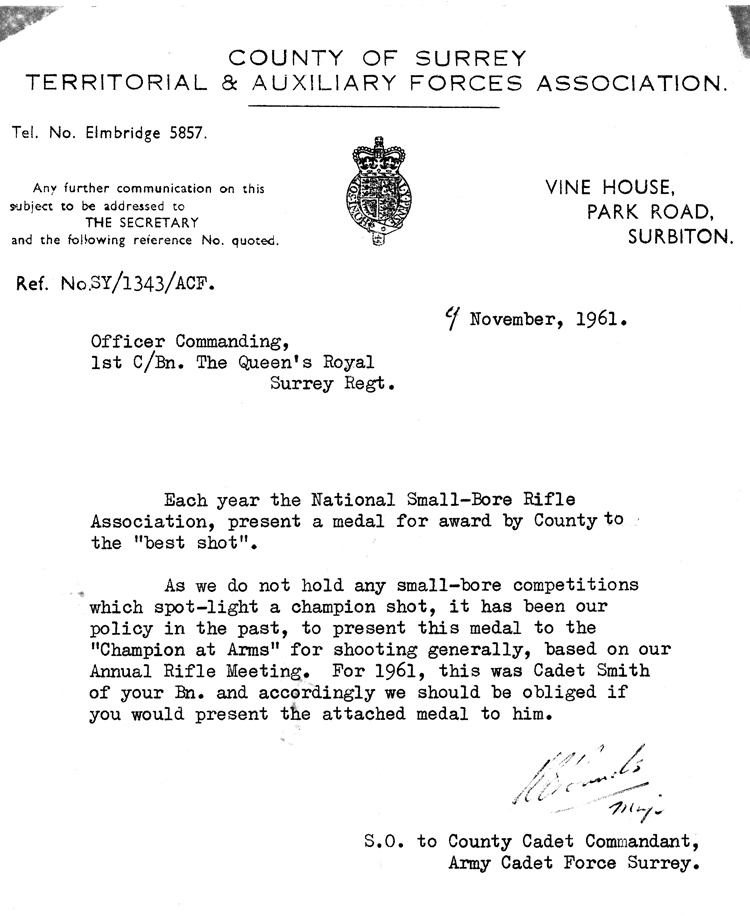
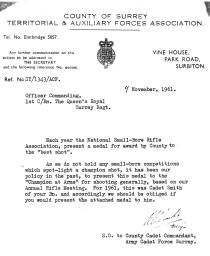
Letter to confirm Cdt.. Duncan
Smith's medal for small-bore shooting medal | 9 Nov 1961 |
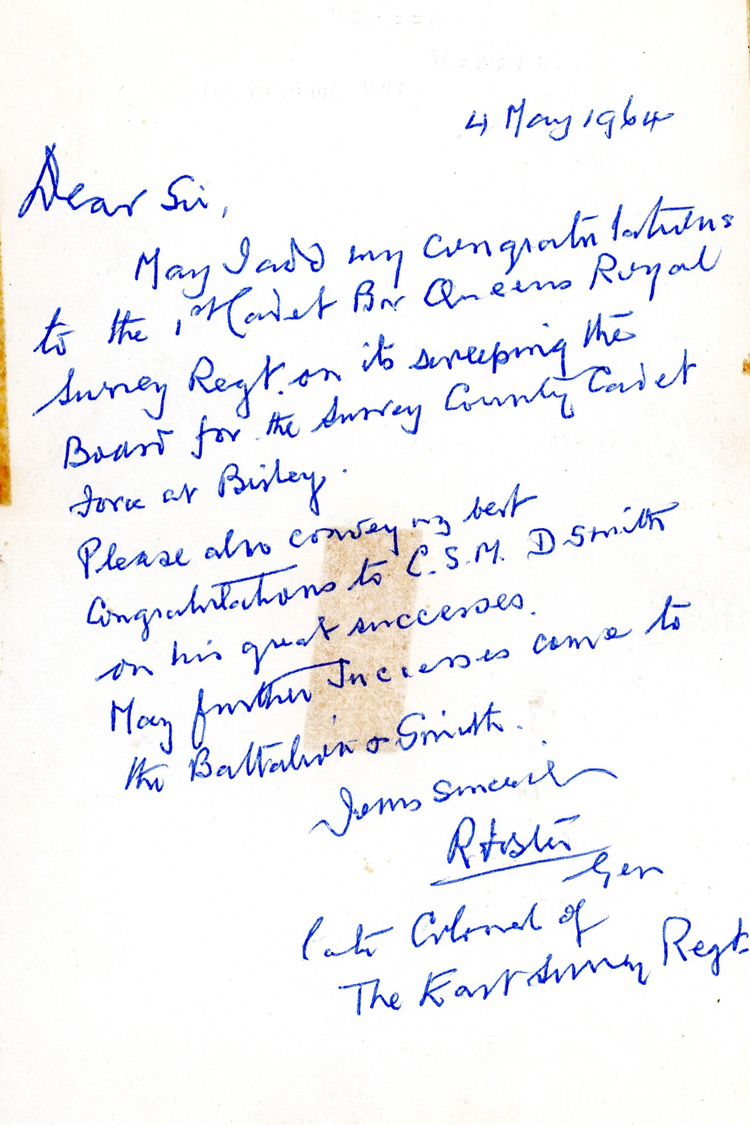
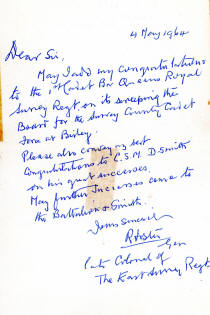
General Foster letter
regarding Bisley - Surrey County Cadet Meeting| 2 May 1964 |
|
 |
|
 |
|
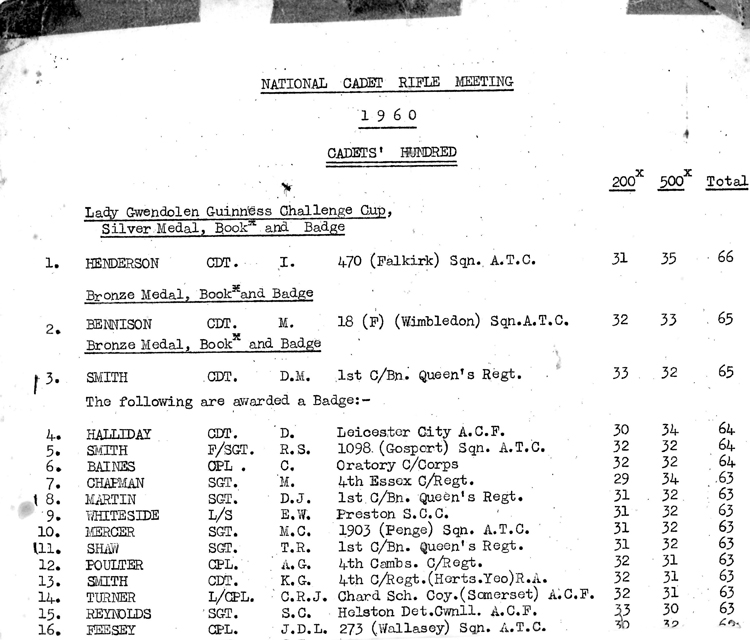
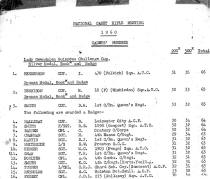
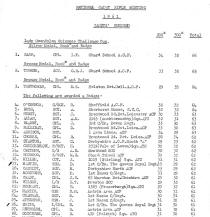
1960 National full-bore rifle
shooting championships at Bisley.
Cadet 100 results |
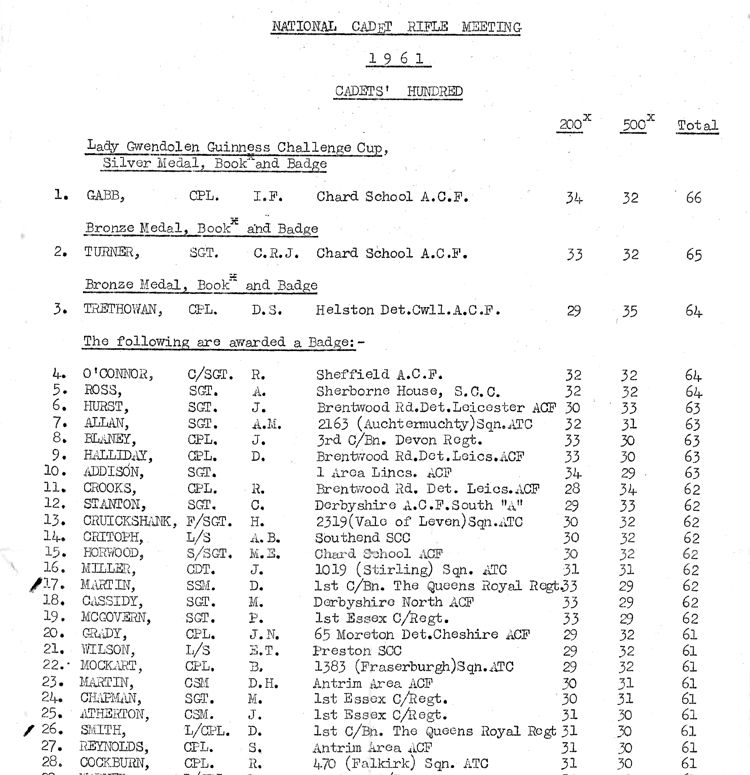
1961 National full-bore rifle
shooting championships at Bisley.
Cadet 100 results |
|
 |
 |
 |
|
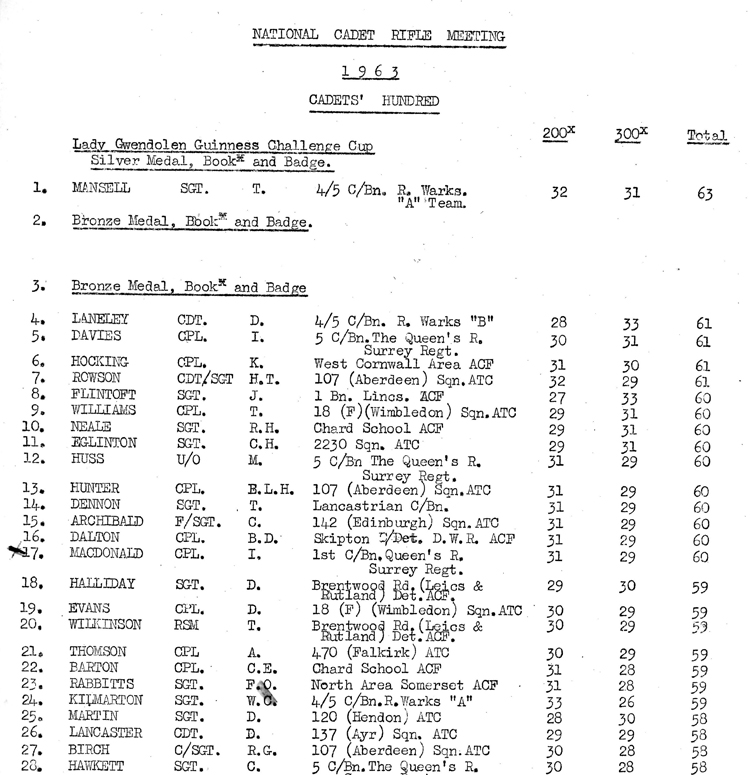
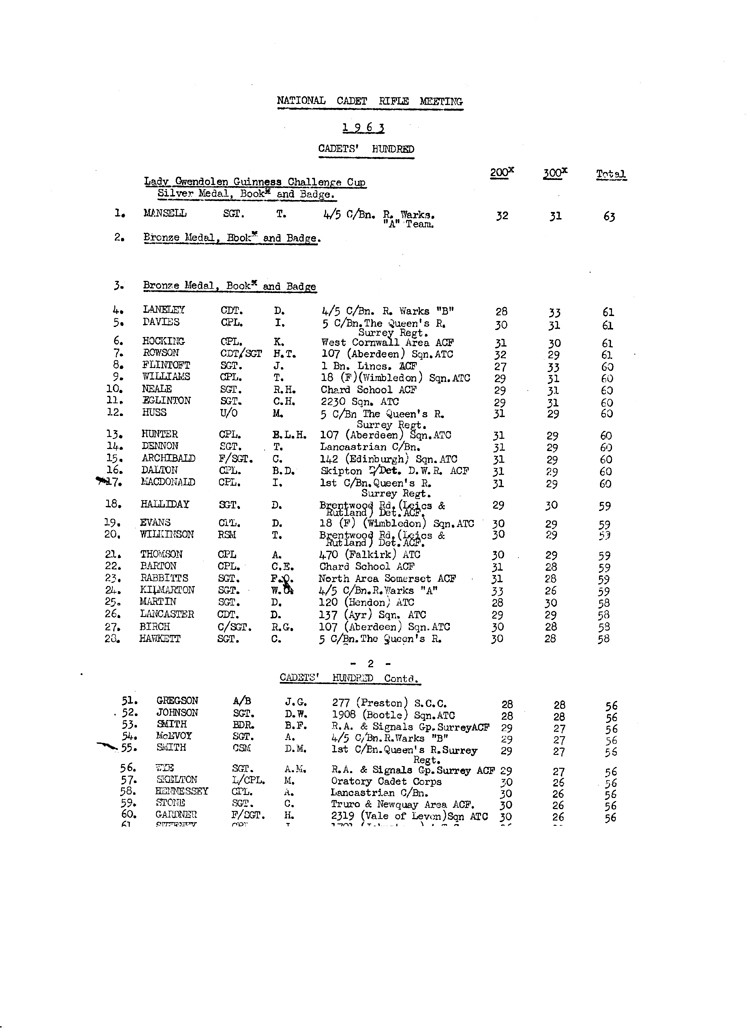
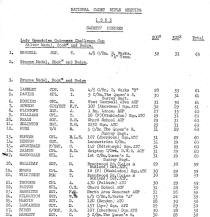
1963. National full-bore rifle
shooting championships at Bisley.
Cadet 100 results |
1963 National full-bore rifle
shooting championships at Bisley
Cadet 100 results |
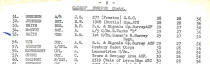
1963 (continued) National
full-bore rifle shooting championships at Bisley. Cadet 100
results |